Realm of the Gods: Supreme Disruption

Untap List:

//play-1
1 Son Goku // Son Goku, Supreme Warrior (bt16 -001 uc)

//deck-1
2 Broly, Crown of Retribution (p-177_pr)
2 Koitsukai, Mechanical Courage (db2-143)
2 SSB Kaio-Ken Son Goku, Concentrated Destruction (db2-001)
1 SSB Vegeta, Unbridled Power (bt16-147 scr)
1 King Piccolo, the New Ruler (eventpack 08)
3 King Vegeta’s Imposing Presence (bt13-030)
4 Afterimage Technique (bt5-023)
4 Yamcha, Merciless Barrage (bt10-008 sr)
2 Syn Shenron, Unison of Calamity (bt10-004)
2 Gotenks, Unison of Rage (ex11-02)
3 Piccolo Jr., Descendant of the King (bt12-004)
4 Frieza, Universe 7 Combination (bt16-011)
4 Son Goku, Ultra Mastery (bt16-021 sr)
4 SSB Vegeta, for the Universe’s Survival (bt16-012)
4 Android 17, Heeding the Call (bt16-009)
4 Golden Frieza, for the Universe’s Survival (bt16-010)
4 Android 17, for the Universe’s Survival (bt16-008 sr)
4 Son Goku Sign of Mastery (bt16-006)

Throughout testing Realm of the Gods, it has become very apparent that Red Goku is easily one of the best decks being released. A lot of lists are already available in the Facebook group and throughout the YouTubes, but today I wanted to show you a different take and also touch on some points you may want to take into your own deck building as we move forward into ROTG format.

The Basic Lineup
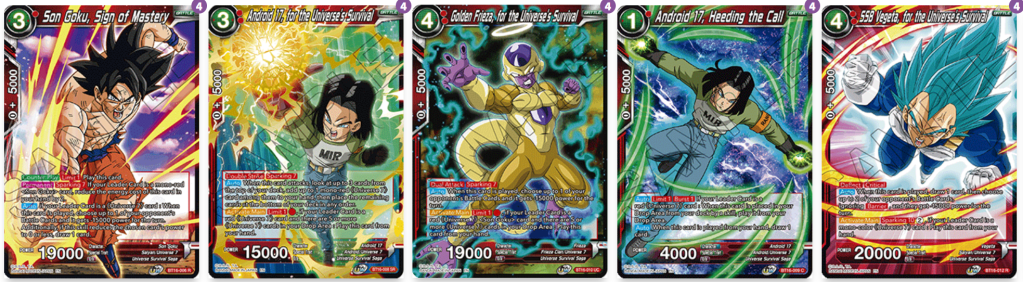
When reading the leader it becomes quite apparent that 1) the leader is the engine and facilitates these lower cost threats with built-in removal, and 2) it is advantageous to play 30+ U7 cards in your list to ensure you can awaken early and make sure your best threats are online. This is why I just go ahead and max out on all of these cards.

Vegeta is a two cost, Deflect, Critical threat that DRAWS A CARD and gives -15k to two Battle Cards, ignoring Barrier.

One cost Android 17 is free combo power and additional Burst if milled off the top and has the upside of being a turn one cantrip.

Three cost Android 17 is a one cost, Double Strike threat that when attacking can find a Mono-Red U7 card and add it to hand.

Golden Frieza is a one cost, 19k Dual Attack threat that gives -15k to something on play. (Great with Syn Shenron Unison)

Son Goku, Sign of Master is a one cost, 19k threat that gives something -15k on play with the upside of potentially drawing a card.

… Hold Up a Sec
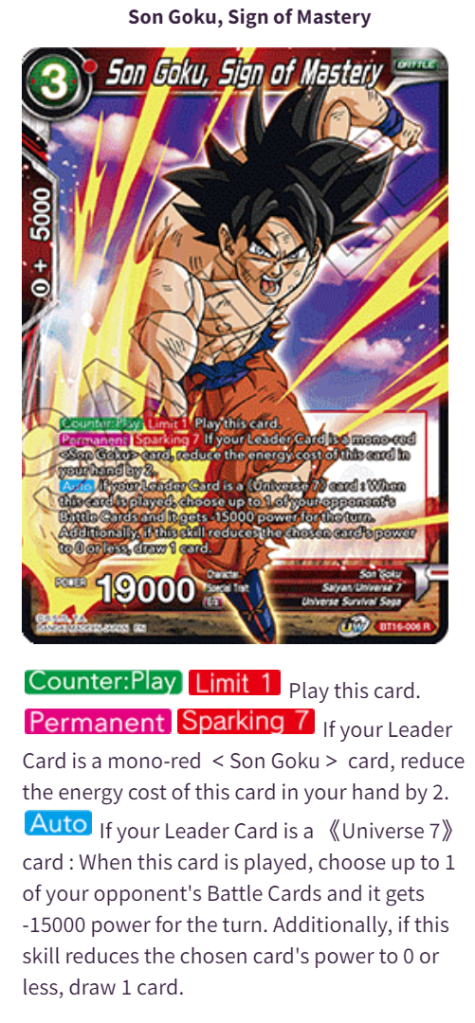
Please be sure to understand that this card is an absolute monster and provides the highest value drip we have seen in since Turles, All Too Easy. One energy offensively or defensively, -15k to something, if the thing dies, draw a card, and you get a 19k attacker. Snapped.

Super Combos – You Have Options
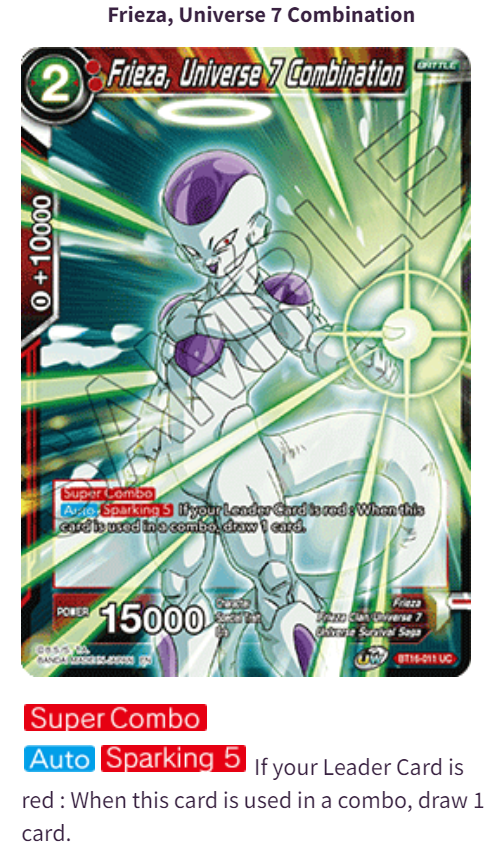
In this version of the deck I opt for 4x Frieza super combo since Sparking 5 is super easy, barely an inconvenience. There are some Red/Blue brews out there that play Beerus super combo, so keep that in mind since both cards have the U7 trait. I do not think I would ever consider Backbone, unless there was a hyper aggressive deck that could kill you before you achieved Sparking 5.

Frieza also tends to be a target for your awakened side leader ability fairly often. Having guaranteed draw super combos is pretty tight, can’t lie.

The Finishing Blow
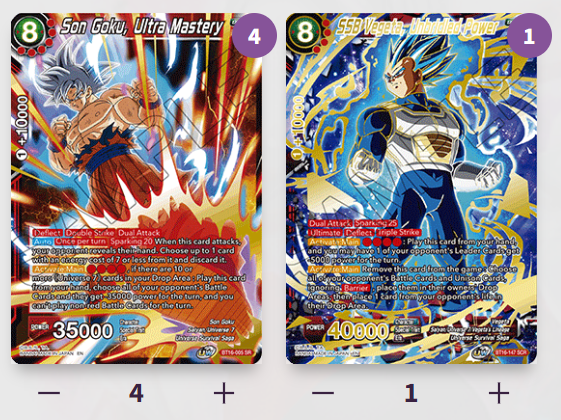
Son Goku, Ultra Mastery is easily one of the coolest finishers this game has ever seen. A four cost, Deflect, Double Strike, Dual Attack Battle Card what gives -35k to your opponent’s board and on the first swing looks at the opponent’s hand and makes them discard ANY card cost seven or less is basically everything I have ever wanted lol. The discard aspect also is what partially led me down the path I took with this list and the Unisons selected.

SSB Vegeta SCR – this is strictly for the whammies and for being on theme. Not only that, but wiping all Battle Cards, ignoring Barrier, is a pretty huge effect. Pan, Time Patrol Maiden and Spacetime Unraveler probably end up getting the nod over time, but we have to at least try with the best boy.

The Unison Plan
“As the format becomes more fair, threats that keep tempo, demand the opponent’s attention, and generate raw/virtual card advantage, on play and overtime, become the most important cards in the game”

If you take a walk through the card pool you’re going to notice that the quality of battle cards that trade with your opponent’s resources profitably is pretty slim. Playing various games with Blue SS4 Vegeta and Green/Yellow Jiren (coming soon), it just became so clear that Unisons like SS3 Gogeta, Buu, and Yellow SS Trunks were often the best threats that allowed the player to keep generating offensive tempo, net immediate value, draw multiple resources from the opponent, and generate that raw/virtual card advantage needed to keep hand size and the board state manageable.

The way I tend to simplify what I am talking about with these types of cards is I often say they create tension. In that moment when card is being cast, a problem is being presented that often has the ability to completely swing the game when it comes to hand sizes and/or board state. The opposing player has to have a solution either in that moment or on the following turn. If the solution is not available, the likelihood of keeping tempo and pace tends to slip out of reach.

That is ultimately what led to this more varied style of Unison base because I wanted to accomplish a few things with each:

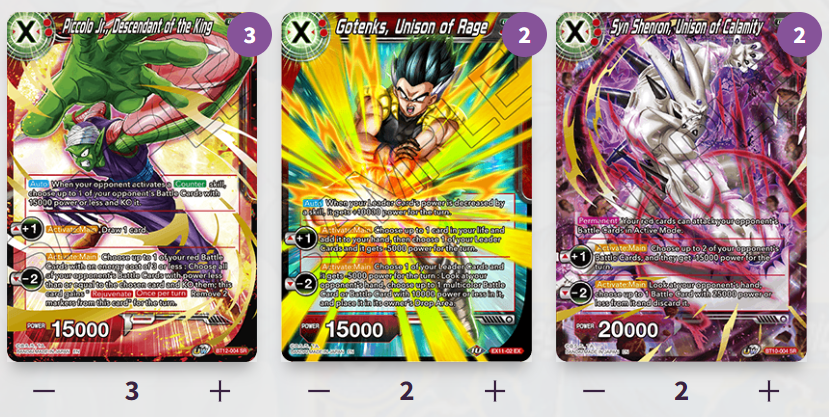
Piccolo Jr. – Draws a card immediately, has an Auto that provides value over the course of the game, and requires the opponent to invest three damage into getting it off the board. If the opponent doesn’t, that equals another card draw for you, another attack, and the ability to leverage Yamcha.

Gotenks – Has the ability to pump your leader and take a life on play to gain some immediate value and the opponent has to invest attacks into getting the markers down to to at least one in order to prevent the immediate cash-in that lets you peak at their hand. If they don’t, it means another attack, and if you have two markers you can just cash it in to peak at their hand and snipe a resource.

Syn Shenron – In this fair format Syn Shenron has been really impressive. Once it comes down it can create an immediate impact by shrinking two Battle Cards by 15k and it allows your Battle Cards to attack your opponent’s Battle Cards in active mode, which is pretty huge considering the type of cheap threats you get to play. Syn Shenron’s minus two effect is also a difference maker since it allows you to again peak at the opposing player’s hand and make them pitch a Battle Card with 25k power or less. This again creates that tension where your opponent has to invest resources, or they get punished.

Deck Philosophy

If you haven’t picked up on it already, we’re an aggressive slanting mid-range deck that focuses on board removal, and sprinkling in targeted hand disruption along the curve to keep ourselves ahead of the opposing player’s threats and potential answers. We also are relying on Unisons to be raw/virtual card advantage threats that create tension and force the opposing player to keep pace. Then once we get to turn four, we’re jamming our Son Goku, Ultra Mastery to pile on the pressure and again using targeted hand disruption to mitigate the opposing player’s threats and answers.

Additionally, the deck offers natural defense with Yamcha Counter: Play, Sparking super combos, and makes the best use out of Afterimage Technique and King Vegeta’s Imposing Presence. If you think about it in terms of playing a fair game based around Battle Cards, this deck kinda has it all.

Conclusion

There are so many ways to build this deck and ways to try and take advantage of the U7 synergies available. It truly is enjoyable to play because all of the cards for the archetype printed in Realm of the Gods are absolute bangers. You have efficient threats with built-in removal that can draw you cards, access to a great pool of red Unisons and tech choices, and a fantastic, flashy way to close out a game in style with Son Goku, Ultra Mastery. As stated above in the philosophy of this version of the deck, the goal truly is to create tension for the opposing player by presenting those damned if you do/don’t scenarios. If there is anything you take away from this article, it definitely should be that. This certainly is a Realm (LOL) that DBS is entering – Happy testing ❤

#scrubfamisbestfam #KTHXBAAAIIIIII
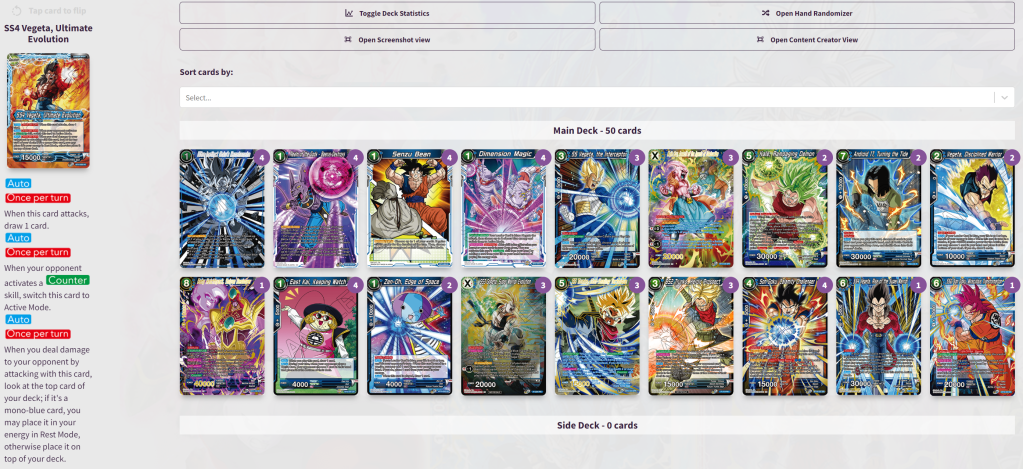
Realm of the Gods: SS4 Vegeta

Untap List:

//play-1
1 Vegeta // SS4 Vegeta, Ultimate Evolution (bt11-032)

//deck-1
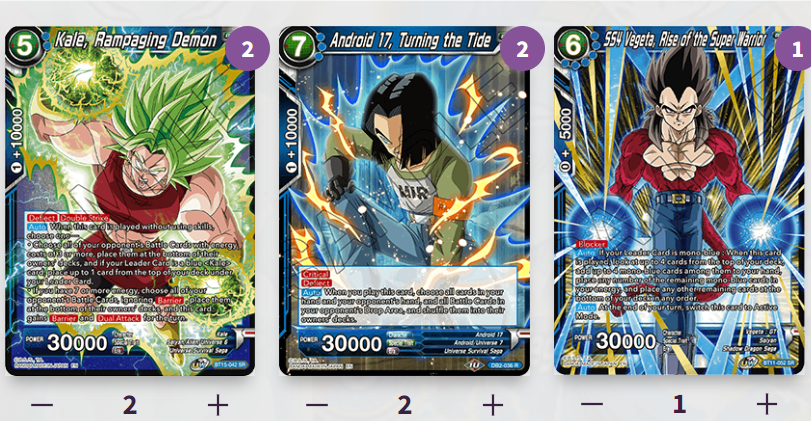
1 SS4 Vegeta, Rise of the Super Warrior (bt11-052)
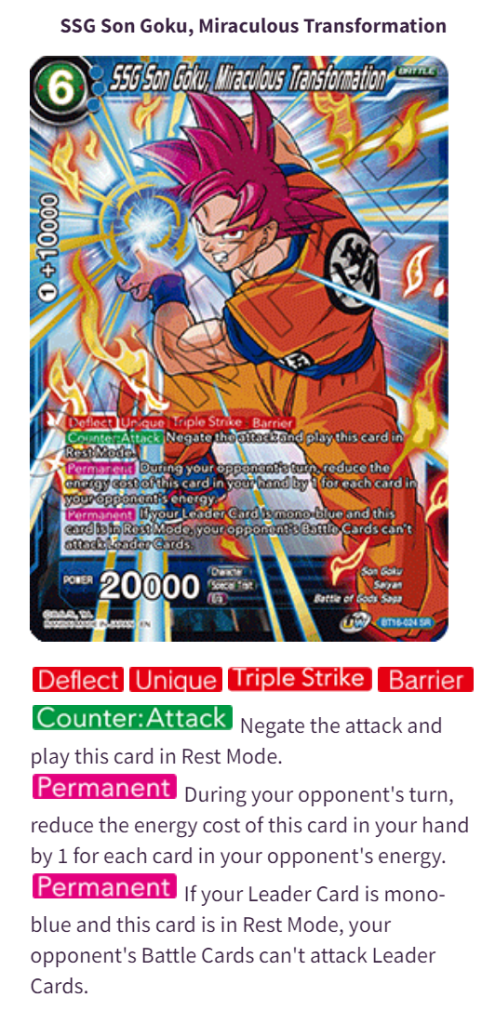
1 SSG Son Goku, Miraculous Transformation (bt-16 spr)
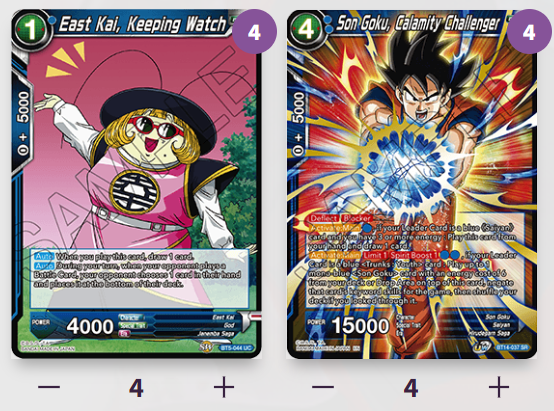
4 Son Goku, Calamity Challenger (bt14)
3 SS2 Trunks, Heroic Prospect (p-219)
3 SS Trunks, God-Sealing Technique (bt10-044)
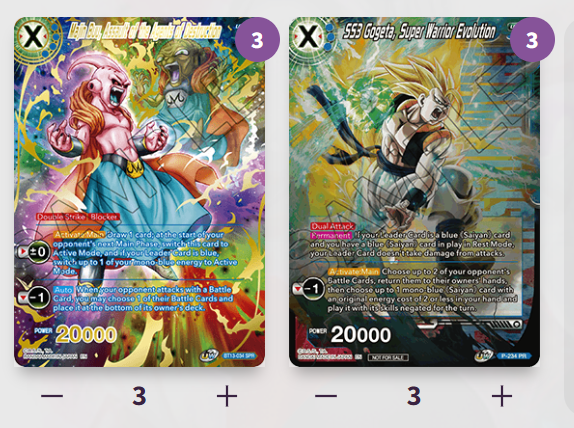
3 SS3 Gogeta, Super Warrior Evolution (p-234)
2 Zen-Oh, Edge of Space (bt10-055)
4 East Kai, Keeping Watch (bt5-044)
1 Baby Hatchhyack, Saiyan Destroyer (bt11-153)
2 Vegeta, Disciplined Warrior (bt11-054)
2 Android 17, Turning the Tide (db2-036)
2 Kale, Rampaging Demon (bt15-042 sr)
3 Majin Buu, Assault of the Agents of Destruction (bt13-034)
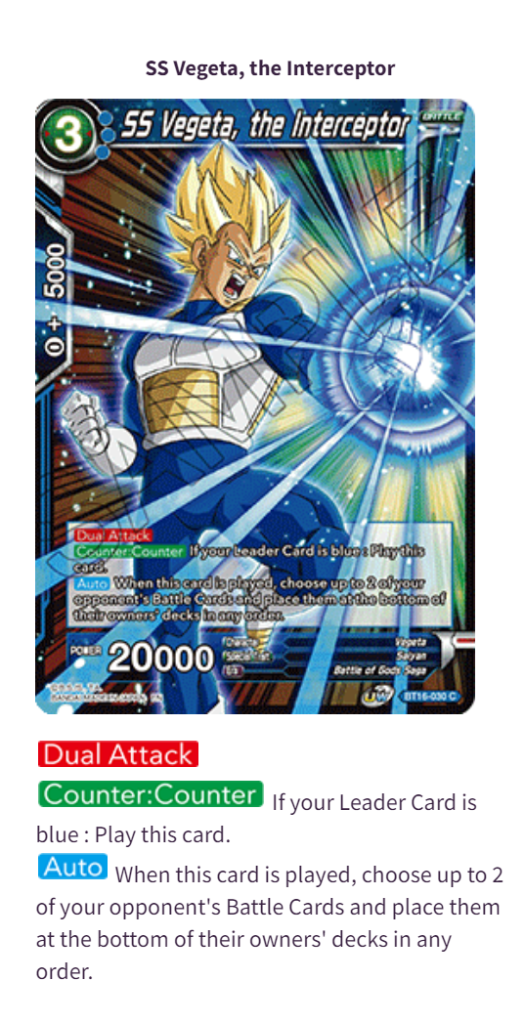
3 SS Vegeta, the Interceptor (bt16-030)
4 Dimension Magic (bt5-050)
4 Senzu Bean (bt1-053)
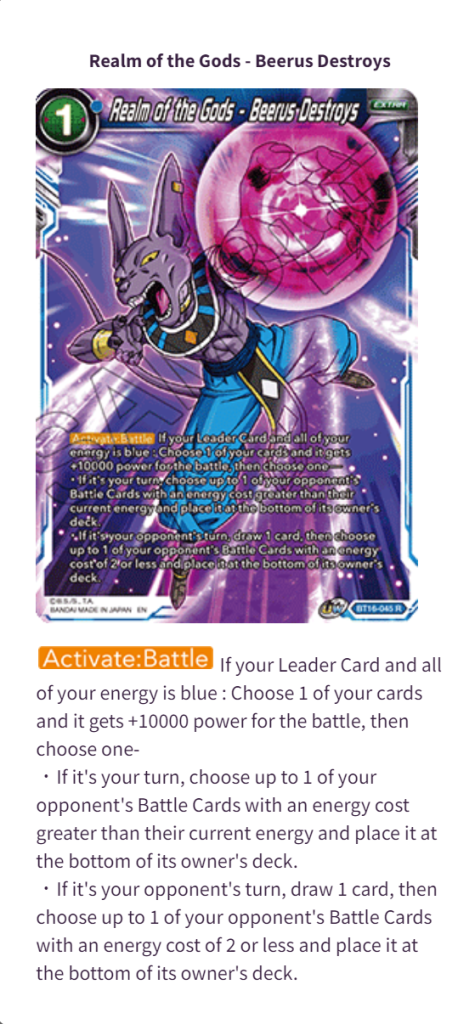
4 Realm of the Gods – Beerus Destroys (bt16-045 r)
4 Ultra Instinct Goku’s Kamehameha (bt9-131)

What is up scrub fam!? Happy New Year and we are starting to work on them resolutions which for me includes a return to writing.. semi-regularly. At this point though, I understand the content game well enough to know that a lot of folks really just want the list and an easy way to upload and play, so moving forward a pic of the list and the text needed to import to Untap directly will stay at the top of these posts as we move forward – happy testing <3.

Why SS4?

SS4 Vegeta has been one of my favorite leaders/archetypes since Vermilion Bloodlines and as new previews roll in each set, I love to see what the new tools offered can do for the archetype. Realm of the Gods definitely dropped some generic Blue bangers that I feel give a much needed shot in the arm to the archetype.

The other piece of this decision to explore SS4 Vegeta is the fact that the format has slowed down so much after multiple ban lists. This has brought up the Average Converted Energy Costs (ACEC) pretty significantly reducing the overall actions per turn/tempo an aggressive/aggro slanted midrange deck can present. This means that big d*$k energy strategies become much more viable.

The New Additions

With the new cycle of extra cards, the one that quietly snuck by was Beerus Destroys. When you read the card it doesn’t necessarily jump off the page, but the card offers Blue a solid, efficient removal option offensively, and the ability to cycle it defensively for a boost and the ability to swing some early tempo against pesky threats that cost 2 or less. The appeal to Beerus Destroys in SS4 Vegeta is that it now gives you eight pump effects to ensure that early ramp and the card works beautifully with UI Kamehameha on defense to provide a ton of combo power for little investment in terms of energy and cards in hand since Beerus Destroys cycles on defense.

SS Vegeta, the Interceptor is a huge pick up for Blue. For three energy you’re getting a 20k Dual Attack threat that on play lets you bottom deck two of your opponent’s threats – which for Blue means that surviving to the late game becomes must easier for you. Not only that, but Dual Attack is a great keyword for fighting opposing Unisons, and being a 20k body means that a swing at the opposing leader is going to trade for a super combo, or two 5k’s in the late game.

Only a single copy in our main deck, but the card always tends to perform well at any point in the game whether you’re on the backfoot trying to stabilize, or you’re in a favorable spot and trying to pour it on. Since the card can feel really heavy in multiples, I would recommend no more than two copies in your main deck if you choose to make any edits to the list. Sitting with two or more in hand at any time just makes your hand feel pretty unplayable at times, and since we have plenty of bridges through the added removal options, floodgates, and Buu Unison there really isn’t a need to go all in on the miraculous transformation.

The Unisons

You can certainly play around with the Unison slot, but since we’re really on the plan to ramp on turn one on the draw or turn two on the play, it makes the most sense to play Unisons that take advantage of our available energy. SS3 Gogeta on your turn two, going second, is such a powerful threat that can reset the board and push the pace if needed and AOD Buu turn three, on the play, just completely takes over the game – especially in this much slower format.

Side note: another reason in favor of higher cost Unisons is the fact that you actually want your opponent to swing at your leader early on to take some damage. If you drop a two cost Unison on turn two, you can guarantee your leader is never going to see a card from life from there on out.

The Payoffs

The payoffs can always change, aside from Turning the Tide. In this list, I really am trying to be in full control of the board at all times, so I lean into Kale, Rampaging Demon to provide a powerful sweeper on five that hits non-Barrier threats cost three or more, and has the upside of being a Barrier, Dual Attack sweeper that hits all opposing threats, including Barrier. Lastly, SS4 Vegeta, Rise of the Super Warrior is in there as a way to pull ahead in those grinding games by either drawing four cards, or ramping two and drawing two.

With the ban list looming some alternative late game threats include:

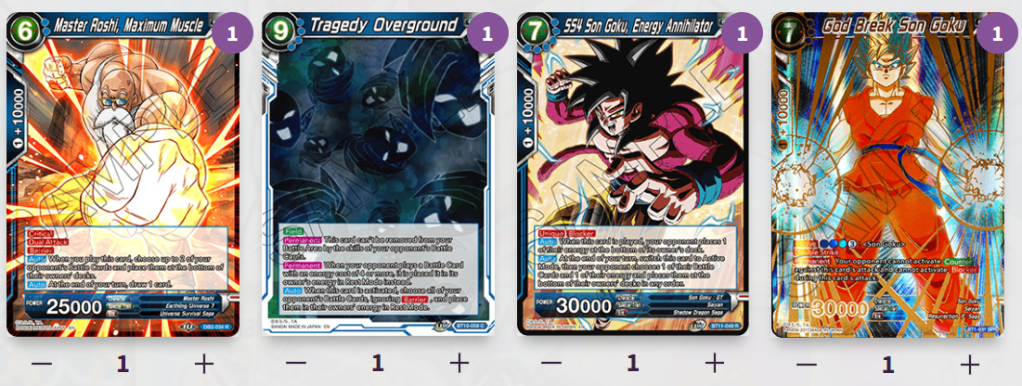
Roshi is already a threat on the cusp of being in my current list. The additional card draw each turn, plus a 25k Barrier, Dual Attack, Critical threat that offers removal is super appealing. I can already see myself trimming a SS Vegeta, the Interceptor for the first copy of Roshi.

Tragedy Overground has made its way into a lot of older SS4 Vegeta variants, and there is for sure merit. Nine energy to me is just a bit too pricey at the moment.

Energy Annihilator is cute, but has the potential to take over a game if unchecked. I am definitely not sold on it.

God Break.. hear me out lol. If the card comes down, the attack is going through – which is huge. Another thing to keep in mind is that it can evolve over our four copies of Calamity Challenger.

Another approach can be to lean into four and five energy threats like Obuni, Golden Avenger, At All Costs Vegeta, etc.

Lastly, you can always lean into Calamity Challenger and main four copies of Path to Infinite and Ultra Instinct -Sign- Son Goku from Cross Worlds.

The Tech

Basically every top strategy tries to play Battle Cards on your turn, so drawing multiple East Kais means you can readily tax your opponent’s hand or their removal options.

Calamity Challenger to me is just a Blue staple since I adore cheap cantrips that can be used as a threat or for additional defense. Calamity Challenger is also just a great way to soak up that additional energy or two you have left over on some turns. They’re also great because since they’re four cost Battle Cards, it is hard to get two for one’d by a Secret Identity Masked Saiyan if you do have multiple in play.

Conclusion

In a more fair world, ramp strategies have to be explored. If you haven’t sleeved up SS4 Vegeta yet, now is the time. Of course there is always the risk of having our best closer banned, but with the tools available from Realm of the Gods the deck definitely feels like it has a lot of its old weaknesses accounted for. In most games you were hard mulling for your UI Kamehameha since there were just four copies, but now you have another strong pump effect that makes the mulligan much more forgiving. Not only that, but you now have solid removal options at almost every spot on the curve to mesh with your floodgates to buy time to the late game. This is a great time to learn the following lesson: as average ACEC goes up – removal gets better since the energy exchanges are closer to even and late game bombs become king.

Happy testing!

#scrubfamisbestfam #KTHXBAI

Leveling Up: 5 Ways To Unleash Your Dormant Potential

It certainly has been a minute since I’ve written a Patreon article about improving within the Dragon Ball Super Card Game… sorry about that (to those who enjoy reading these things). To be honest, life has gotten in the way – and it has been the best possible thing for me in regards to my growth within competitive DBS.

I’ve had two of my best results within DBS happen recently and there are definitely a lot of factors that contributed to that – the main ones being that DBS once again became just a hobby and I was able to take my natural abilities and instincts from playing TCGs over the years and just rely on those to carry me through my deck building, deck selection, and decision making within the game itself.

To address the first part of that, for a while DBS was such a huge part of my life. It was the vehicle to hang out with friends, compete, act as a creative outlet, also provided income via content creation/the 3xG Patreon, and of course I did a lot of other activities related to the game – honestly to a point where it just wasn’t fun to play and the drive to compete/succeed just wasn’t there anymore.

The thing is about that, once you take something and make it your biggest focus, you become so mentally and emotionally invested that you end up with your self-esteem and self-worth tied to what you are able to accomplish or create in that space. It isn’t healthy and is definitely not the best way to generate positive results – there’s too much pressure on any and every action you take that you end up with some form of choice paralysis and your anxiety gets to an all-time high before every game you play, because YOU make the results matter.

Leading up the the Gamerz event and the Columbus regional the boys and myself didn’t get to spend much time testing at all. Between my new career, relationship, and overall focus on just living and loving life – DBS took a backseat. Instead, I relied on my skills and knowledge from the past and combined that with just “goldfishing” or “shadow playing” to make sure my decks functioned and the theory used would come to life on a regular basis.

Today I want to walk you through some important points that can help with participating in competitive events or just act as a refresher/re-engagement tool for anyone who is burnt out within the competitive scene.

#1 “If you know the enemy and know yourself, you need not fear the result of a hundred battles. If you know yourself but not the enemy, for every victory gained you will also suffer a defeat. If you know neither the enemy nor yourself, you will succumb in every battle.” – Sun Tzu’s “The Art of War”

This quote truly hits the nail on the head when trying to describe how to best be prepared for events. If you walk into an event only knowing what your deck can do, then you’re going to struggle trying to learn matchups on the fly. If you walk into an event not knowing the full potential of your deck and not knowing what the rest of the field is capable of, you’re doomed to fail. However, if you walk in and know exactly what your deck’s full potential is, alongside what the rest of the field’s full potential is, you’re setting yourself up for success.

Yes testing for me was limited, but I spent any available free time watching YouTube, reading through Facebook posts, engaging in our FOExPPG team chats, and checking out decks on deck building sites to learn what decks to have on my radar. Not only that, I spent a lot of time talking through various theories, and also the full potential of each deck, alongside the crux of each deck. From there I began to think of how to capitalize on those weaknesses whilst playing something with a really high power level to match what the rest of the format was doing. From there I would just spend my time goldfishing/shadow playing the deck to find all of the interactions and to help fine tune ratios.

To break this down further, looking at the format heading into Gamerz the narrative within the community was focused around how diverse the format was. Not only that, but decks that have to commit resources in the first 2 turns were incredibly popular – King Piccolo, Launch, Mecha, etc.

This meant that if you could out-tempo the opposing player in the first 2-3 turns and try to kill on 3, you could easily win a lot of game 1’s. Then of course in post board games you have the ability to still be high tempo, but the added disruption could get you there. Mecha Frieza was the perfect fit for this due to the ability to abuse Giant Ball and Tyrannical Blow in conjunction with Frieza 4 drop from Battle Evolution to act as your early game pressure that snowballs into U9 Assemble, which also helps you get to your wincon of Cell Xeno or Bergamo beatdown on turn 3.

Heading into Columbus, the narrative within the community was that Mecha, Dark Broly, Vegeks, and King Piccolo were the best decks. The goal heading into this event was to avoid mirror matches since the field was more narrow. Not only that but if you look at Mecha, Dark Broly, King Piccolo, and Vegeks a few things stand out to me: awakening with a high life total seems appealing since it gives you a buffer, Dark Broly and Vegeks both play Dark Power Black Masked Saiyan and Koitsukai in their 65, God-Sealing is incredible versus Bergamo and Demigra, Heroic Prospect is solid, playing a lot of negates is good for reducing combo steps, a reliable board wipe is great right now, Gohan 4 drop that kills a 3 or less, ignoring Barrier, is great against Mecha, Bean is busted, Zen-Oh Super Combo gets you out of being tapped out by your opponent… the list goes on for a while.

While Frisco and Jose ended up on Soul Striker Boujack, I went with SS2 Gohan instead due to its ability to access God-Sealing on turn 2 with Zen-Oh Unison, the ability to generate cheap threats without being hurt by DPBMS or Koitsukai, being able to balance out play/draw with Zen-Oh Ramp, consistent access to Gohan 10 drop, abusing Buu Unison, awakening consistently on turn 2, access to 8 negates main board between Dimension Magic and Vegeta 1 drop, being able to ramp harder to Turning the Tide when on the play, being able to main deck the Gohan 4 drop that kills a Barrier threat 3 or less, playing a deck that loves 4x Zen-Oh Super Combo – basically, SS2 Gohan was the perfect call for the event, in my opinion.

These two scenarios above both show the power of knowing the enemy and knowing yourself. As stated before, there was minimal testing involved for both of the decks used in these events – it just came down to being familiar with the format enough to be able to speak on and theorize what cards and turns within the game were the most impactful, then seeing how we could beat prey on that for that specific weekend. This honestly is probably the hardest thing to learn, since you have to balance the targeting you’re trying to do with playing something inherently powerful. It is very easy to lean towards playing something that is too narrowly focused on targeting that you sacrifice overall power or too narrowly focused on being powerful that you lose matchup percentage in pre and post board games.

When analyzing a format I tend to look at a few things:

1. What threats do the best decks HAVE to play in order to be optimal? How do they play those threats?

2. What cards trade positively with those threats? (Generate X for 1’s, God-Sealing Versus Bergamo – you trade 1 card for 2 of your opponent’s energy and you stop a threat)

3. Among the top decks, what does the ceiling look like on power turns (turn 2.5 – 4, 2.5 refers to you having 2 energy heading into their turn 3)

4. What cards best disrupt those turns that fit into a powerful strategy?

5. Once we stifle a power turn, how can we best capitalize and take over/set ourselves up for a win?

#2 All the Small Things

The details always matter – this alone truly separates the top tables from the rest of the pack. Cards in hand, cards in drop, cards in warp, what card does my opponent have the ability to play this turn, what cards hurt me in this position, what sequence of plays gets me back in the game/what sequence of plays can my opponent string together to beat me, etc. – this list of items should be running through your head constantly throughout a game, this is the kind of information that keeps you engaged.

When you’re dialed in at a granular level and you’re aware of everything going on within a given matchup and the game state on a turn by turn basis, the results are staggering. The ability to predict, prepare, and either choose to act or be reactive based on the data presented is such a huge boon. It isn’t just as simple as shuffling up and hoping you draw well, there is another human on the other side of the table that is trying to defeat you and you are forced to interact with the cards they are choosing to play – you have the choice to just be aloof and care free, or the choice to keep repeating the questions in your mind about what is going on within the game so that you can make the best decisions possible based on all discovered and yet to be discovered data.

It takes a ton of time and practice to get to this point, but the hardest part is consistently executing each round, regardless of opponent.

This leads into a piece about “farming” lower levels of competition. The early rounds of a tournament are so crucial to reaching top cut/placing high overall. Sometimes you either select a deck based on a particular matchup and face a deck that hard counters you early in the jungle, or more often than not, you’re just not dialed in because you don’t take your opponent seriously and you think you can just coast to a win.

The way I’ve combat this is from watching a Magic streamer named Michael Jacob, who’s handle is Darkest_Mage. When he plays a game via Arena or MTGO, regardless of whether or not it’s a rando in testing, or a well-known player in a tournament, he refers to them as “enemy”. Of course I still interact and engage in conversation with my opponents, because having fun is paramount, but when I just think about the game itself, I always think in terms of being against the enemy, the person/deck that is actively trying to defeat me/end my tournament. Doing this has helped me stay dialed in for the past few events, and has also aided in any testing I do as well.

#3 I Control My Own Destiny, Not The Game

Every decision you make within a game matters. What you charge, how you sequence your turn, what damage you take, what you combo, what turn you decide to go for game, how you plan to punish a mistake, what cards you try to trade up for, etc. – it all adds up across the course of a game of DBS. That’s the most beautiful part of this game. This means that when you’re playing, you shouldn’t be thinking of the match result, you should be thinking in terms of how well you’re making each decision throughout a game.

This is so important because this is what pulls you out of the results oriented mindset and puts you in a place where you’re focusing on all of the things that matter while the game is taking place. Not only that, but it helps you better find what may have went wrong for you during the course of the game and takes you away from trying to blame variance. Variance exists in every card game, but I can guarantee 99% of losses are tied to a decision that was made at any point of a given game – from the mulligan, to the last few turns.

Speaking of mulligans! When looking at your opening hand you have to ask yourself a few questions:

1. Does this hand support my most optimal plan for turns 1-3? (If it is post-board you have to still prioritize the cards that make your deck function so you have more chances of drawing to your sideboarded outs, your second priority should be drawing any needed tech for the matchup)

2. If not – what cards are missing?

3. How many copies of X card am I playing and what are my chances of drawing it if I only get to draw Y cards on the redraw?

Based on this info I will determine how many cards I throw back. I tend to be really aggressive when it comes to the mulligan since I stick to that rule of making sure my hand supports my most optimal early plays. The mulligan also usually plays into my deck selection as well. I love playing a deck that has the ability to mulligan for a certain set of cards to get the early game card draw going – SS2 Gohan just needs a skill-less and an enabler and Monarch just needs a U9 Assemble or a Frieza 4 drop plus an extra card to get going.

#4 A 15 Card Sideboard does Nothing, but a 15 Card Sideboard with Intent is the Most Powerful Asset

Best of 3 is my format of choice and the reason for that is because of my strength in post-board games. I’ve spoken on this before, but having a detailed plan is the most important part about building a sideboard, especially when such a high percentage of games take place after sideboarding. Having a plan is one thing, but take that another step and walkthrough what cards you can side out in each matchup to create the best configuration for that given game. The thing that puts that over the top is when you then sideboard based on being on the play vs being on the draw.

When you’re on the play, you want to be as proactive as possible, since you get to strike first and have the ability to spend your energy in the early turns to punish the opponent’s strategy with your sideboarded answers. On the play you also get to keep the overall cost of your deck the same since your threats that cost 2+ energy can come down without too many repercussions.

When you’re on the draw, it’s more about reacting and being able to control the pace of the game through your sideboard cards to disrupt the opponent’s power turns which are usually 2-4. Also when you’re on the draw you should take a look at your threats depending on the matchup to see whether or not the game is ever going to get to the point where you can deploy them or ask yourself if they are expensive enough to where a single answer will be a blowout since you’re going second.

When creating your sideboard you really should be thinking about cards that are relatively inexpensive that either act as harsh annoyances to the opponent’s game plan or are just stone cold axe murderers within a given matchup. It is also important to know what your main board is naturally strong against/weak against so you can properly configure your entire 65 to sure up those weak spots or enhance those strengths within a given matchup. You also when choosing your sideboard cards should write down the purpose of each card.

Sideboard for Gamerz:

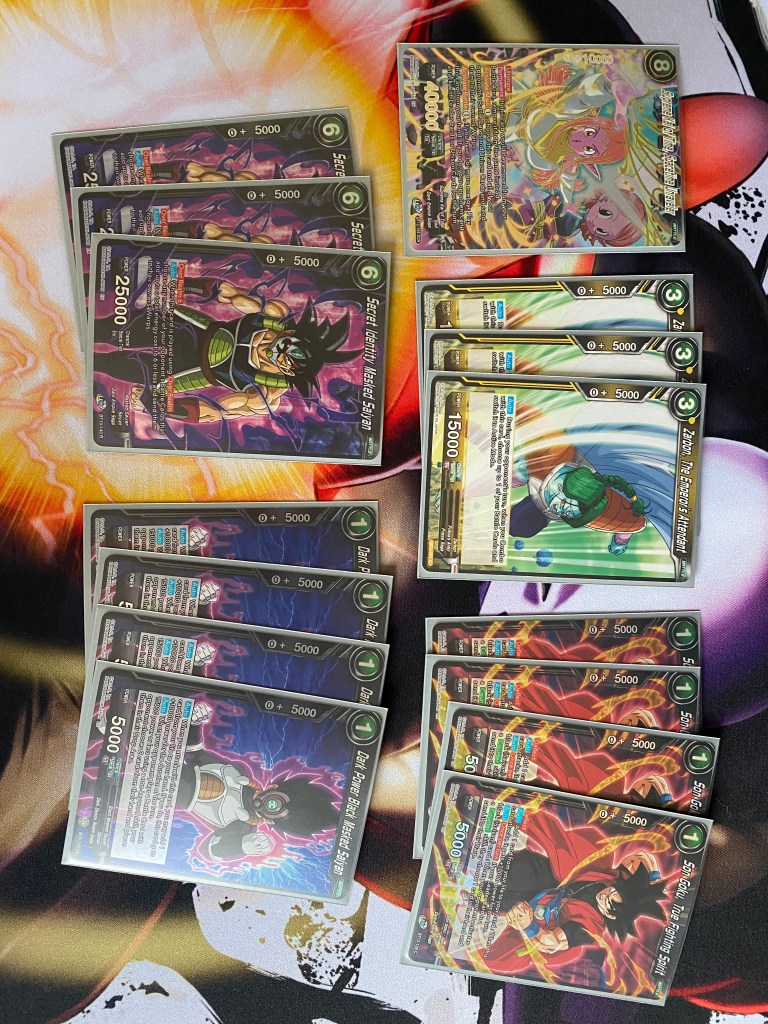
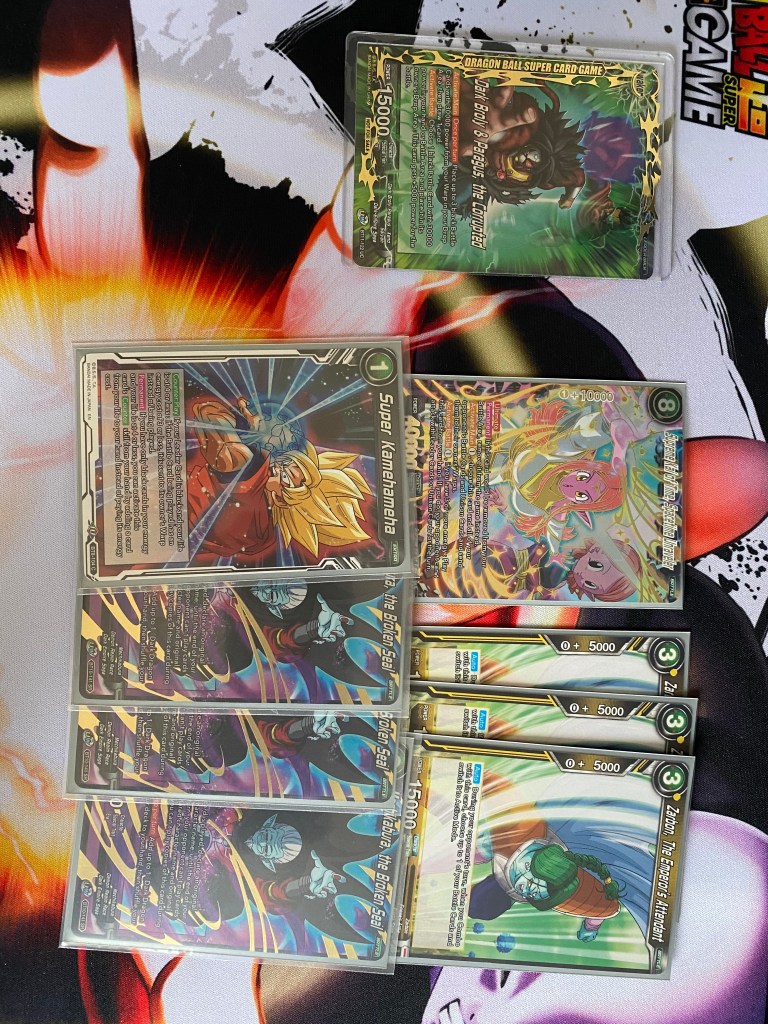
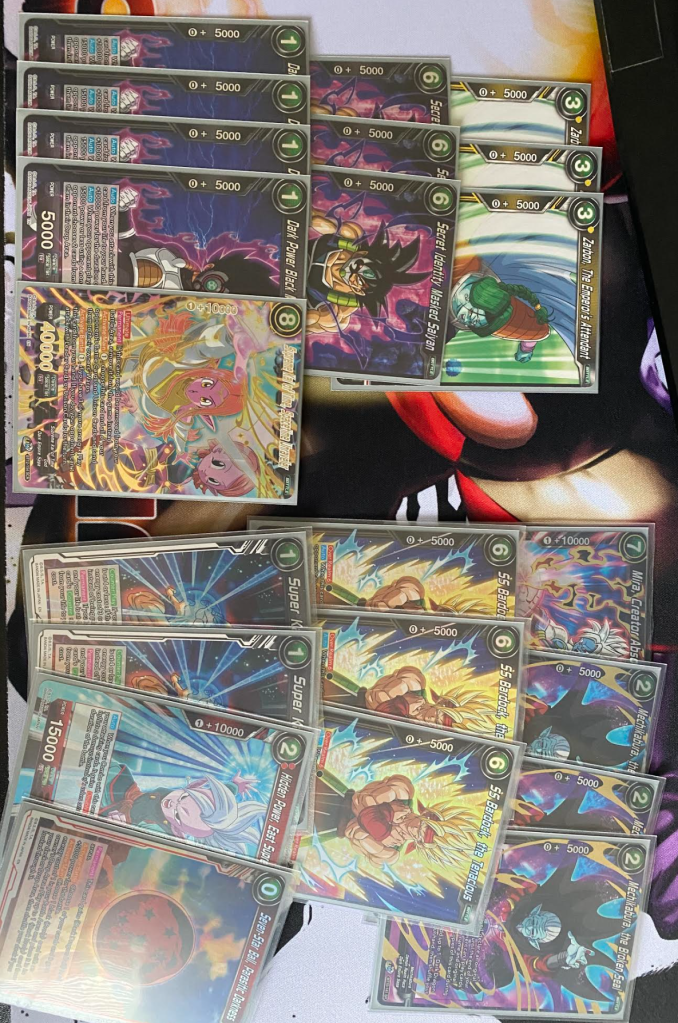
3x Vegeta, Unison of Fury – Dark Broly

2x Final Spirit Cannon – Any matchup where I would need to tap down something without a combo step in order to trigger Bergamo and go for game

2x Released from Evil – Reboot Gohan

1x Tyrannical Blow – Any matchup where 3 drops or less/unisons mattered a lot

1x Secret Identity Masked Saiyan – Any matchup where this card was an X for 1

1x Final Flash – Any matchup with a troubling threat whether it be something annoying with barrier or a huge finisher

1x Planet Vegeta – Post-board consistency with saiyan tech package

1x Son Goku, Absolute Annihilator – Invoker on the play and Baby

1x Son Gohan, Changing History – Blue decks

1x Dark Power Black Masked Saiyan – King Piccolo and Vegeks mainly

1x Mechikabura, the Broken Seal – Any deck that was weak to having their important card named or another way to stall Dark Broly

This is so important because once the tournament is over you can grade how well each deck served its purpose/whether or not you may have gotten the format wrong. Where I went wrong at Gamerz was with my prediction of seeing more blue decks/the actual impact of 2x Final Spirit Cannon, alongside my worry about Reboot Gohan and 2x Released from Evil. In hindsight, I could have played 1x Final Spirit Cannon, 1x Released from Evil, and played 2x Nimbus in the side – which would have been so good in top cut rounds.

Its also important in deck selection to make sure that your deck can balance out the play/draw disparity. This is something a lot of players miss when trying to determine what the best decks are within a given format. This also plays into how I landed on mono-yellow Mecha and Blue SS2 Gohan – powerful decks that can awaken consistently and have a way of generating card advantage and threat advantage for little to no energy on the play and draw.

#5 Shadow Playing/Goldfishing is Underrated

Understanding how a deck functions is the most important part of this game. Often times we find ourselves without someone to play with or just not enough time in the day/week to properly test. Building a deck on Untap/Octgn or in paper, then setting up a game for you to draw, mulligan, and mock play the first few turns trying to find the ceiling and crux of a deck is invaluable. This is the basis for all of the data I used heading into the last few events – I understood how the decks wanted to best function, and I found ways to prey upon that desire.

From here I would start to develop my theories and with any free brain space I would begin processing what a game would look like and how the cards would best trade against each other across the course of an actual game. Then of course I would bounce that data off of the 3xG Bois and the FOExPPG team to gain their feedback and take that into my calculations.

I’d then start constructing a deck to capitalize on all of the data points available that is also powerful whether it is a mainstream archetype or not. I’d shadow play/goldfish to make sure the deck can function as intended. Next, if life permits, I’d run that deck against other decks I have built to make sure it checks the power level box. Then finally, if life permits, I’d run the deck against the best decks/decks I’m trying to target to make sure the games play out similar to what was in my head. From there I would make my adjustments to then correct any issues whether it be a lack of consistency or a lack of overall power.

All of this starts with that initial shadow playing to test each of the best deck’s functionality though – isn’t that wild? This is probably the one thing a lot of players do, but don’t necessarily leverage the data as much as they should. Also keep in mind that if you’re shadow playing and you fall in love with one of the best decks, that is okay too! From there you can take that deck and see how it can capitalize on the given format/fix the issues you’ve noticed within the current configuration – that is exactly how I landed on Monarch (mono-yellow Mecha), because Frieza 4 drop from Battle Evolution made it so that you always (hyperbole) found multiple U9 Assembles, which as we know is the card that skyrockets the deck’s power level and consistency.

Conclusion

As you can see from the rants above, there’s still a lot to learn/re-engage with when it comes to competitive DBS. I hope going over these points helped in some way, because for me they have been huge in my own development over the last few months. As you head into your next local or your next major event, I hope you can keep some of these items in mind and see how well you’re doing on these five points. I look forward to hopefully making more content like this, especially with the next set coming out, and I thank you so much for taking the time to read my thoughts about stuff and things.

#scrubfamisbestfam #KTHXBAI

A Look at the Format

Another PPG webcam qualifier has passed us by and the perceived meta game continues to do some moving and shaking coming off of the Pro-Play Tour just last weekend.

Top 16 of the Pro-Play Tour – Invoker Winner

5x Dark Broly
4x Mecha Frieza
1x Reboot Gohan
1x Turles
1x Invoker
1x Launch
1x Syn Shenron
1x Red Broly
1x Clashku

The narrative of top 16 – with 5 copies of Dark Broly and 4 copies of Mecha it is very easy to tell that public enemy number 1 heading into the event was Red Broly. With these more mid-range decks making it into top 16, they fell prey to both ends of the spectrum – leader based aggro of Gohan and Turles, and of course Invoker being the overall winner in the finals.

Top 8 of the Webcam Qualifier – Red Broly Winner

2x Red Broly
2x Reboot Gohan
1x King Piccolo
1x Turles
1x Golden Frieza
1x Mecha Frieza

The narrative of top 8 – with 2 true mid-range strategies and the rest of cut being more aggro we are able to see that players this week were trying to punish Invoker, Mecha Frieza, and Dark Broly. With decks like Turles and Reboot Gohan punishing those three strategies, it left quite a large opening for Red Broly to reclaim the throne this week due to the fragile nature of Dormant decks. Another thing to keep in mind – look at these decks in top cut; the only one that is truly weak to Mechikabura is Red Broly. This is another reason why Dark Broly took a step back.

What I Would Have Played this Weekend

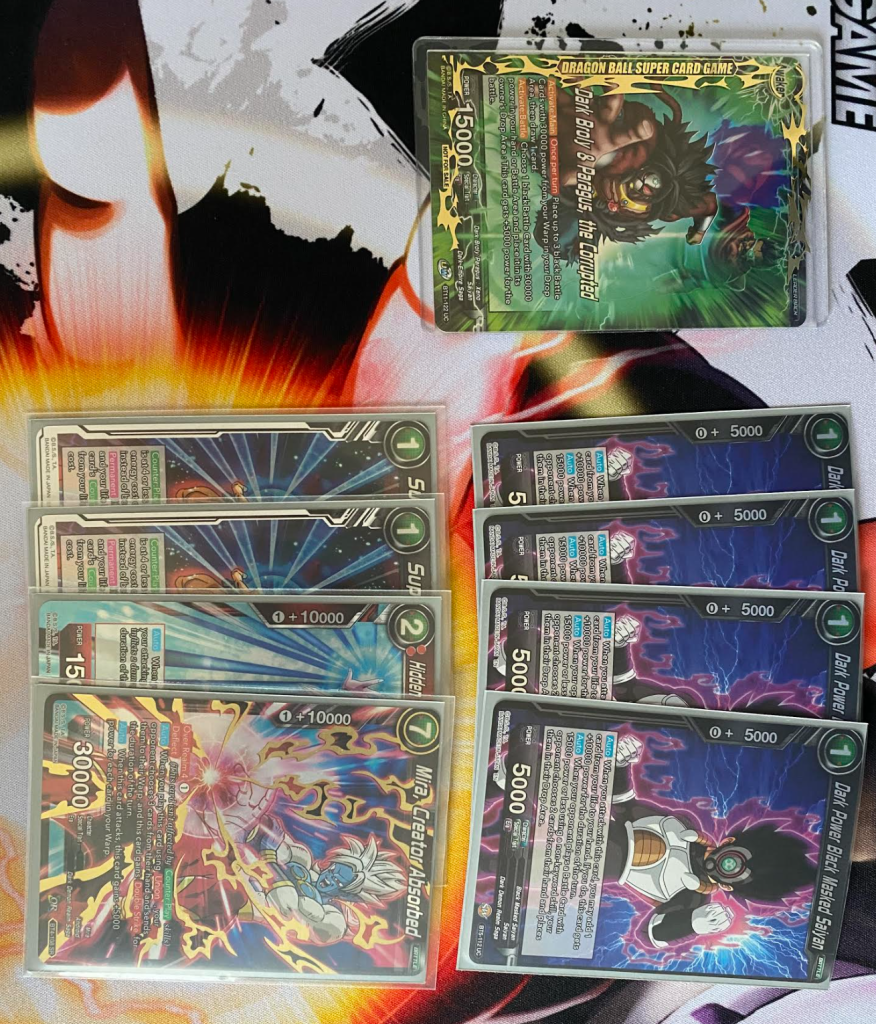
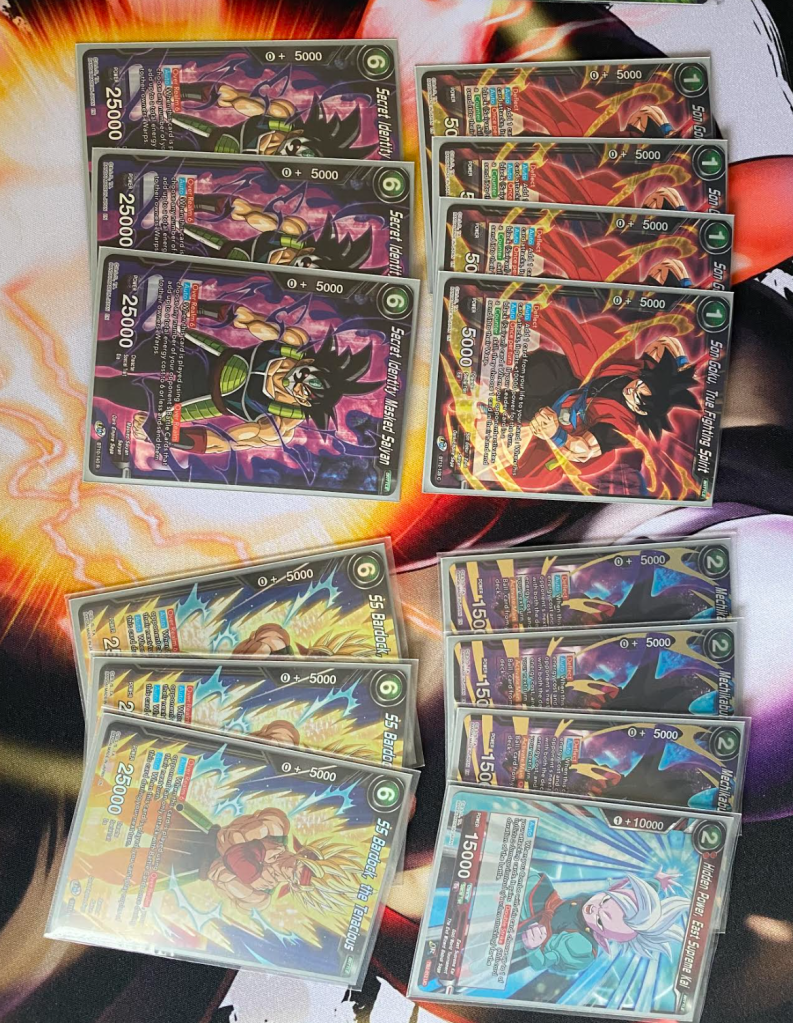
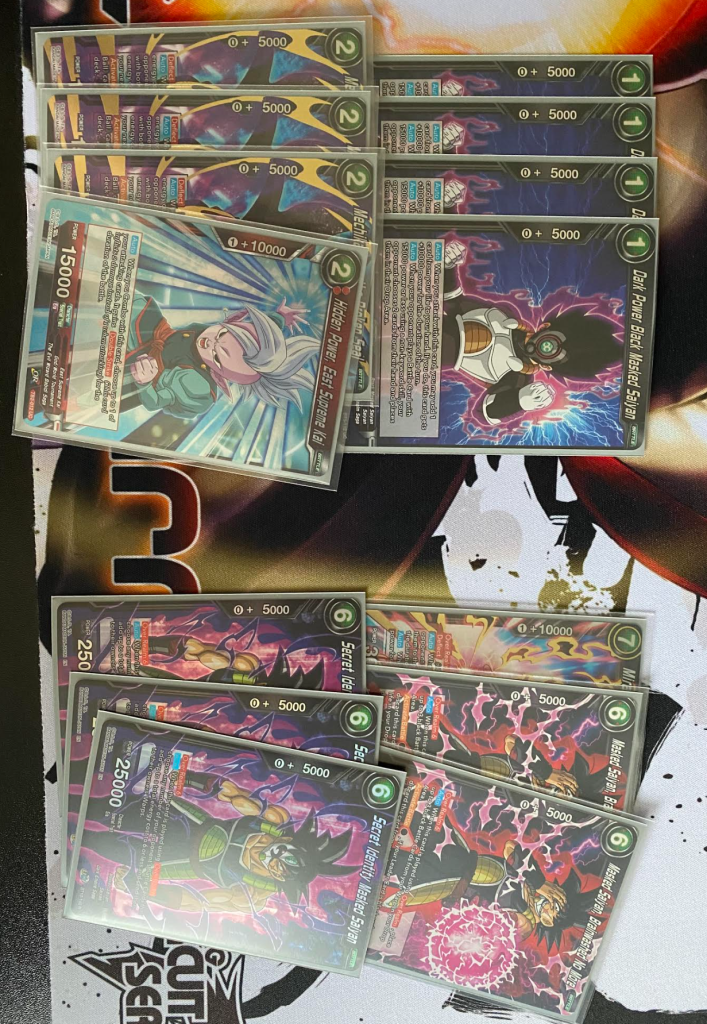
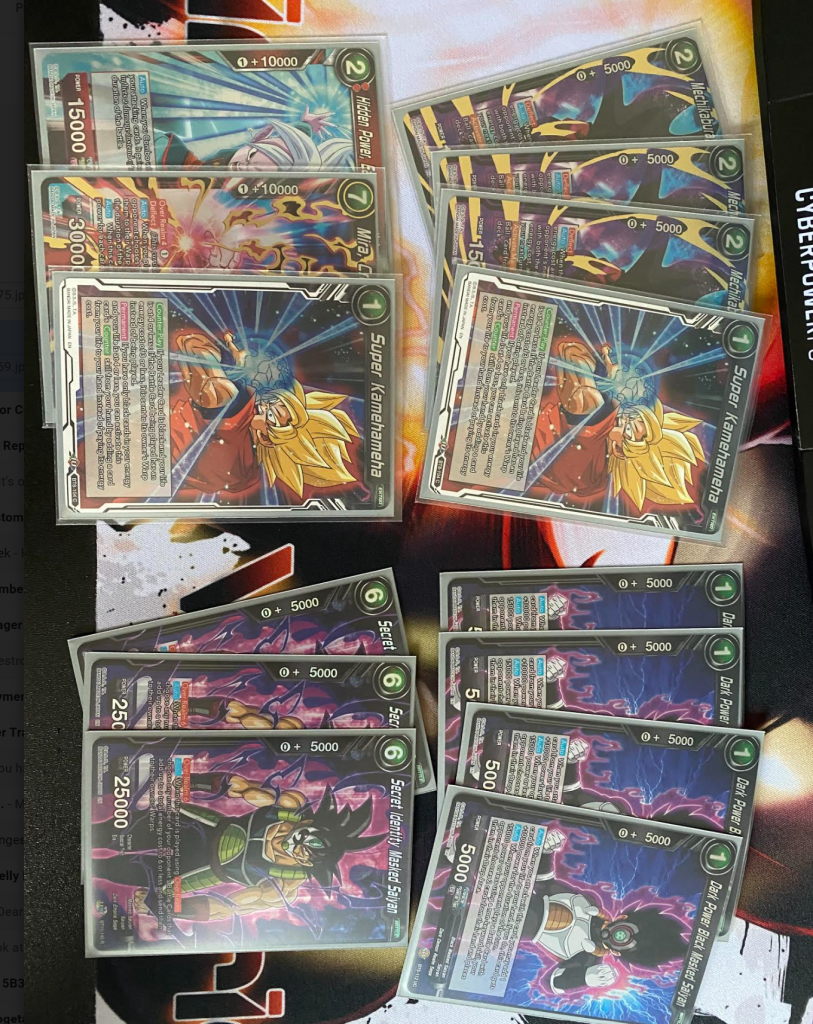
There have been so many builds of Dark Broly to come out over the past few weeks, and I have spent a ton of time in the lab myself – in preparation for the chains coming off (official today). In the case of this list there are a few main deck inclusions that stand out:

3x SS Bardock, the Tenacious – in a world of aggro decks, opposing mechikaburas trying to timewalk you, and having to worry about tech cards like Dark Banisher, Dark Masked King, etc. Tenacious is a brilliant way to answer them all and the card stays incredibly relevant in a ton of match-ups.

2x Super Kamehameha – This is a main deck concession to Toppo, Heroic Prospect, and anything else that costs 3 or less and could ruin our best turns. Additionally, this can serve as well timed removal against aggro as well.

The Board – Simple and On Purpose

Our sideboard plan is meant to give us more of an edge against Reboot Gohan while still having a ton of cards that hit a lot of match-ups without having to truly sacrifice our deck’s integrity – this is probably the most important part about side-boarding right now.

Reboot Gohan

Against Reboot Gohan our plan is to get our money out of the thiccest blocker in the game alongside Brainwashed and Kai SCR:

Turles

Similar plan for Reboot Gohan, but since the clock is not as fast we actually need to shift to more removal and add in Dark Powers to be able to punish the Crusher Corp.

Red Broly

Step 1: Dark Power Black Masked Saiyan
Step 2: Mechikabura
Step 3: SS Bardock, the Tenacious
Step 4: Mechikabura again or kill the batman

Blue Decks

We need to punish their counter game and then increase our removal potential. The only change occurs if they’re playing Obuni in game 1, then you may want to bring in Dark Power Black Masked Saiyans as well.

King Piccolo

Mechikabura is so bad in this matchup, so we instead opt for some Dark Powers and then sacrifice some 30ks in order to give us access to a board wipe to go along Tenacious in the main. We keep Super Kamehamehas in here in order to help combat Toppo, Righteous Aid.

Vegeks

Another case of Mechikabura being bad so we opt again for Dark Powers and then Secret Identity to go alongside our Tenacious D. Super Kamehameha gets to come out here since there are no viable targets, nor targets you really care about.

Invoker

Arguably our worst match-up, but also not expected to do well this weekend since it won last weekend. We know we have to be aggressive so we cut some defense in order to help counter their pile of negates.

The Format is an Onion – IT HAS LAYERS!!!

Red Broly
Syn Shenron
Mecha
Dark Broly
Reboot Gohan
Turles
Invoker
Vegeks/Gogeta Xeno
King Piccolo
and MORE!!!

A lot of the community has spent time trying to define this format and it has led to a ton of discussion. There are a few ways to try and simplify it, so let me give you some of the most high level views I have seen expressed so far:

Frisco’s Way – The Two Extremes and Nothing in the Middle Beats Both

Red Broly

Everything else

Invoker

The Triangle

Red Broly

Mecha

Dark Broly

The Spectrum

Hyper Aggro – A. Red Broly, B. King Piccolo, C. Vegeks, D. Gogeta Xeno

Dormant Decks – A. Reboot Gohan, B. Turles

Interactive – A. Dark Broly, B. Mecha, C. Launch

Control – A. Invoker, B. Syn Shenron

The way I tend to look at this format is more so on a spectrum for each of the decks that share a common thread and then rank them in order of what deck is the best option based on the previous week’s meta game. The information listed above is based off of the information from the Pro-Play Tour in preparation for the 1/31 webcam event.

Dormant and Invoker overperformed at the PPT which means that I want to be on Red Broly if I am aggressive to be able to punish Dormant. I also would want to be on Dark Broly if I am looking to be interactive since 30 bodies punish Dormant as well. Red Broly also gets the nod over Invoker, and Dark Broly just needs to be prepared for the match-up where as the other mid-range decks have no shot. On the other hand, if I wanted to play a Dormant deck I would opt for Reboot Gohan since the clock is much faster against the other 3 archetypes.

Let’s look again at the top 8 from this past weekend:

2x Red Broly
2x Reboot Gohan
1x King Piccolo
1x Turles
1x Golden Frieza
1x Mecha Frieza

How should this information impact the spectrum?

Red Broly still remains the best option because if aggro and Dormant show up, Broly is still the best option to combat both.

For Dormant based decks, if Red Broly is king – then I want to be on Reboot Gohan so I can fight in the phone booth with them.

Mecha and Dark Broly both get worked over by Reboot Gohan, Turles, and King Piccolo – it seems Launch has the best shot here.

For control, if Red Broly is option A, Reboot Gohan is option A, and Launch is option A – then I for sure want to be on Syn Shenron this week.

Conclusion

This format is absurdly good, and for the first time in a good while it feels like there is solid meta game churn on a weekly basis that allows for new decks to claim the top spot in their respective archetype. The challenge then becomes – are you willing to put in the work? If yes, you’ll be heavily rewarded with solid tournament performance. If no, then you will stay behind every single week. Reading formats isn’t easy, and trying to simplify them is such a difficult task and can often lead to mistakes in deck selection or preparation. My advice is to learn the potential of what each top deck can do going forward and learn how to break down the most important cards and interactions within the format. There is a huge reason why Mechikabura 2 drop went from being the best battle card in the game last weekend, to mediocre this week – things ALWAYS change, so be ready!

#scrubfamisbestfam #KTHXBAAAIIIIIIII
Crusher Corps – This is the Way

The Turles hype train has started to gain some steam as we continue to close in on the official release date of Vicious Rejuvenation! Yesterday, we released our deep dive into ACEC and today I want to take sometime to talk about how the Turles deck functions, the card selections made to optimize ACEC, and of course how I think Turles stacks up to the rest of the format.

Looking for the KO

Turles is definitely a fresh archetype when it comes to the introduction of the Crusher Corps alongside the Tree of Might being planted on the opponent’s side of the field to act as your deck’s engine. The truth is, this is basically just a aggro/mid-range strategy that leans on the leader to be the win condition – akin to set 1 Blue Vegeta, Reboot Gohan, etc. The difference is that you ALWAYS have access to your over-statted FDC to get the job done. As the game ramps up and comes to a close you simply become vintage George Foreman looking for an opening to land your KO punch. The twist is, once awakened you now get to choose what life your opponent takes – such a boon in a world where you’re looking to deal multiple points of damage in a single turn to close out the game.

Chapter 1: The Early Awakening

Awakening as early as possible and flipping up as much life as possible in the first couple of turns is exactly where you want to be. Of course it gets tough playing a bunch of cards with Unique, but ultimately the deck NEEDS it in order to start pulling ahead early so that every swing with a Turles card can become lethal as the game winds down.

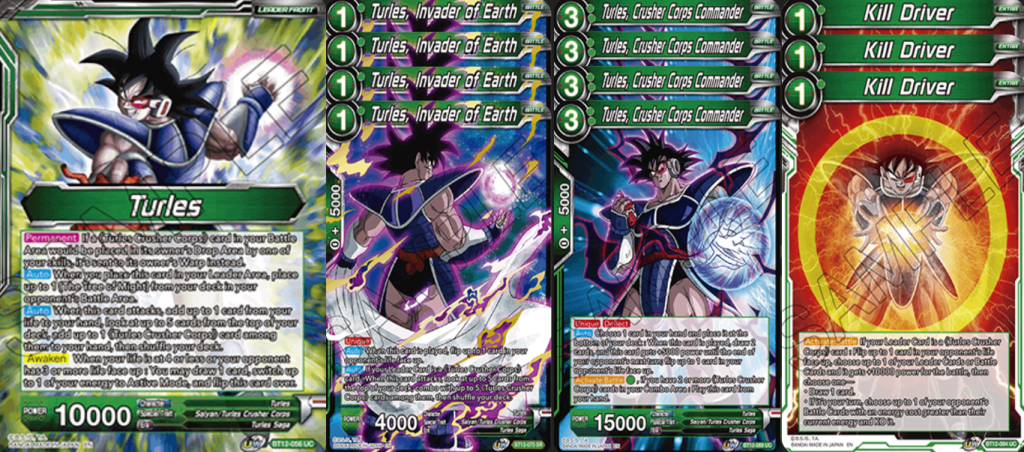
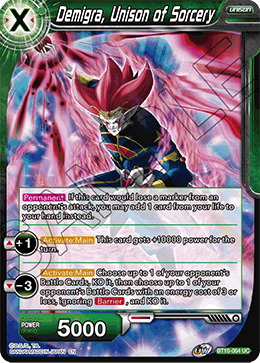
On the play you have the option to either deploy your 1 drop Turles, play a Demigra Unison, or leave open Kill Driver. Once you pass turn, your opponent will flip one life up, at this point your opponent is either at one life face up, or two based on whether you played Turles on 1, or used Kill Driver. From here you can then swing with Turles 1 drop, activate the auto to combo from the top of the deck, then use the [Activate: Battle] on Turles 3 to play it and then flip the 3rd life face up so you can then trigger the awakening still during the combo step. Once that happens, you’re now sitting at a high life total and have gained access to choosing how you want your leader’s damage to be taken the rest of the game. You also then gain access to the leader’s [Activate: Main] to keep recycling your Fruits from the drop area and ensure you always have one in deck to grab on the opponent’s turn when the Tree triggers.

Going second it gets tricky since you won’t have the ability to trigger Tree on the opponent’s first turn due to the energy requirement. On your first turn you will always swing leader first before playing anything just to gain as much information as possible and to dodge any sort of removal for your 1 drop. You then can play the 1 drop, Demigra, or leave energy open for Kill Driver. Turn 2 once 1 to 2 are face up you then go whichever route you have left available to you to get the 3rd so you get the early awakening.

The early awakening always leads towards your best games, things get complicated when your opponent has the ability to take their own life with various abilities. This is why Demigra is so important – to offer you an easy way to getting to 4 life if that is how you’re forced to awaken.

Chapter 2: The Bois

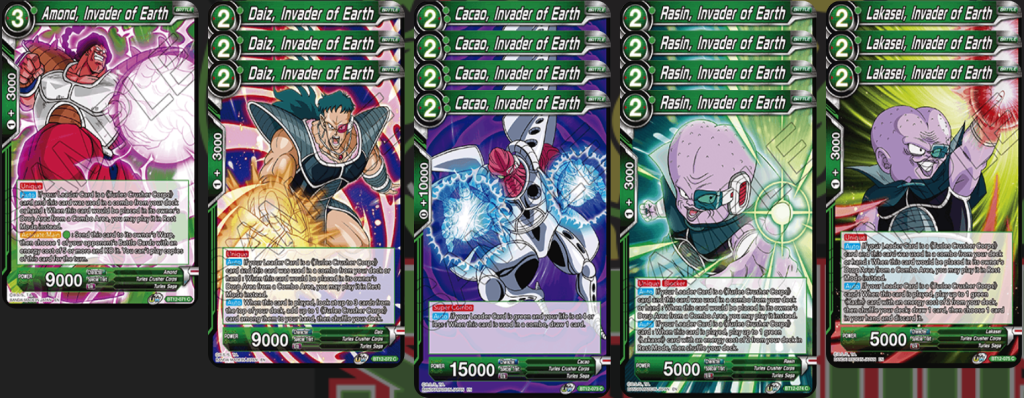
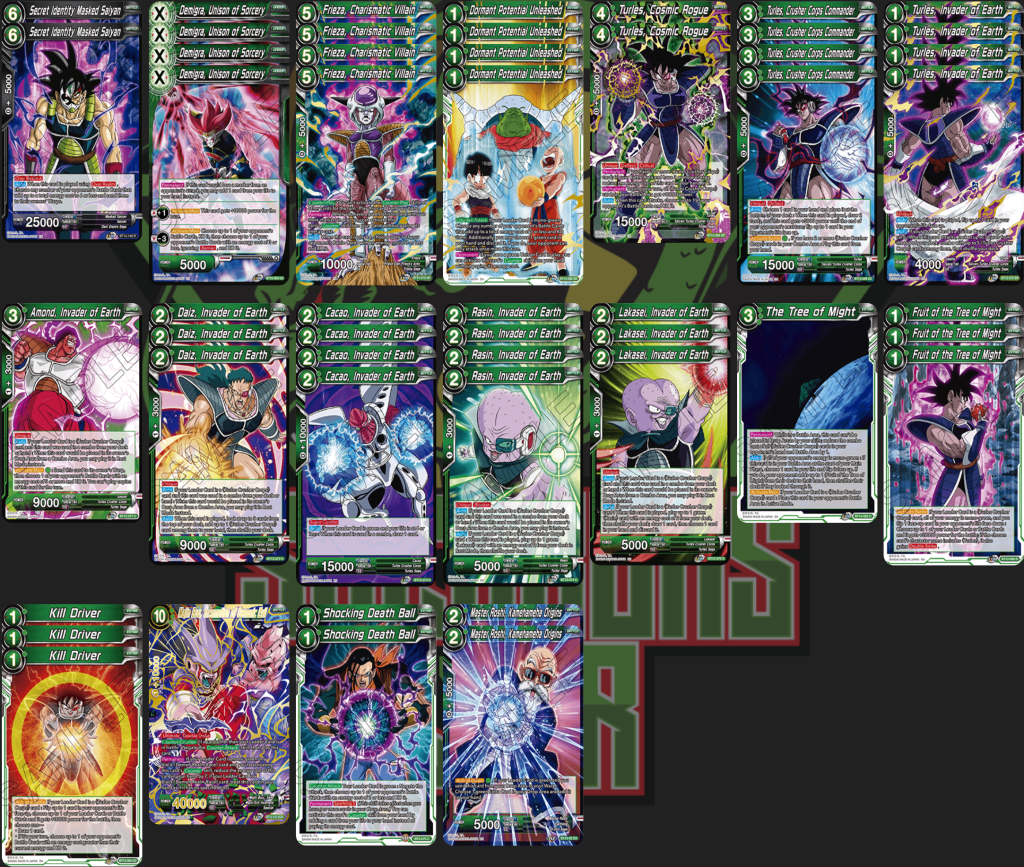
The Crusher Corp offers you quite a bit of value. The fact that they are free bodies that come into play when you combo is already enough upside, but with Lakasei and Rasin you’re guaranteed a Blocker and the ability to loot (draw 1, discard 1). Amond is the perfect singleton since it gives us additional flexibility in our removal suite. Cacao is our super combo and can be found off of our leader skill or Turles 1 drop at any point in the game. Daiz is just a consistency generator that allows us to see more copies of our best cards, including Cacaaaoooooooooooooo.

Chapter 3: Demigra is the Stimulus Package

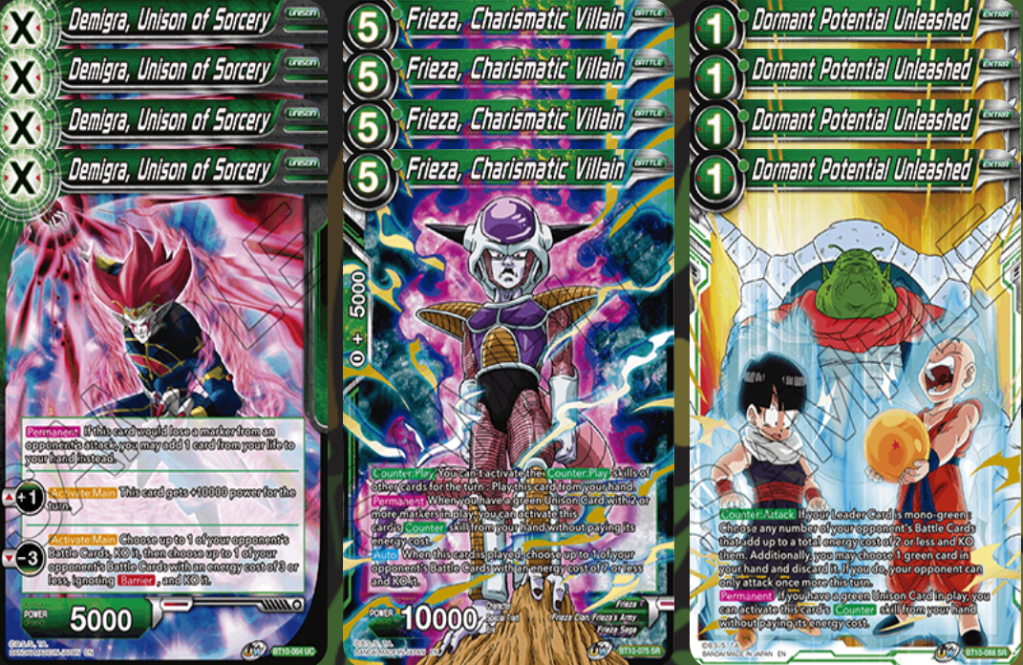
The best 1 drop in the entire game that then enables a source for awakening and the early abuse of the best defensive duo in the game – Captain Charisma and Dormant Potential Unleashed. Demigra is good in every spot and drawing multiples rarely feels bad since in some spots you’re 100% down to just have a hexproof 15k attacker that can’t be countered. Dormant helps us keep games in reach when they have the potential of getting away from us, and Frieza acts as a catch all against any deck reliant on specific cards hitting the battlefield.

There are always other options available for the Unison slot, but as we discussed yesterday it is really difficult to spend your entire 2 to 3 energy on just 1 singular Unison when paying just 1 energy nets you so much more value and opens up more actions per turn overall in those crucial first 3 turns. Lastly, turn 1 Unison into Captain Charisma is just too powerful in a format where Red Broly: Br exists.

Chapter 4: The Sweet Science

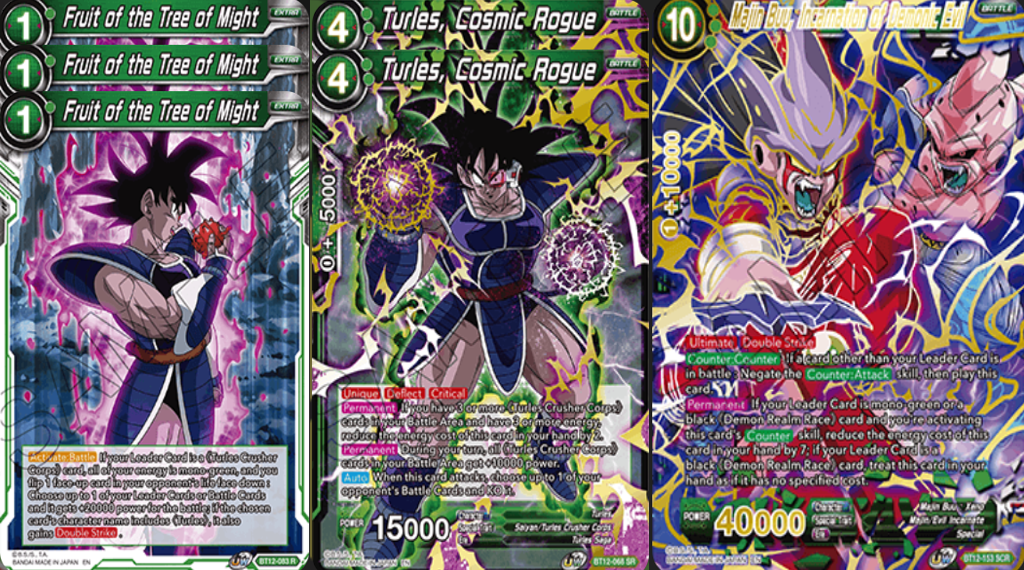
In Turles, you’re never short on win conditions due to the leader’s ability to always have access to Fruit of the Tree of Might. This is our hammer, our Dark Saber, our Mjolnir – you get it. The best part about Fruit is that the [Double Strike] portion works for both your leader and Turles Battle Cards. This means that any 1 drop, 3 drop, or 4 (in rare occasions) can threaten lethal damage – this is exactly how the deck gains the advantage and wins. The opponent has to worry about every Turles swing, which means all of their resources become devoted to stopping it from happening; and of course once a swing does go through it is way too powerful to out combo a large majority of the time.

Cosmic Rogue is a situational closer at times depending on the opposing player’s access to floodgates and counters once it comes down. At times, Turles will be the absolute best draw, but more often you never want to deploy him – this is why he is at 2 copies.

Demonic Evil is our SCR of choice because having access to a Bad Ring Laser type effect with access to Fruit of the Tree of Might targeting any of your Turles Battle Cards just feels amazing overall. Definitely a needed SCR for this style of deck!

Chapter 5: The Complete Main Deck

The last additions are 2x Shocking Death Ball, 2x Master Roshi, Kamehameha Origins, and 2x Secret Identity Black Masked Saiyan. Shocking Death Ball acting as a free negate the large percentage of the time is clutch, and the upside of being a hard negate that kills a relevant body is exactly the type of value we are looking for in Turles. Roshi of course is an auto include in some number due to the versatility. Secret Identity Black Masked Saiyan is just a clean answer to most singular threats and of course if boards happen to go wide.

***Yes, the list is 51 cards… but the Tree goes to the opponent’s side to start the game bb***

Chapter 6: The Metrics

Demigra Unison – 1, 1, 1, 1
Turles 4 – 2, 2
Turles 3 – 1, 1, 1, 1
Turles 1 – 1, 1, 1, 1
Fruit – 1, 1, 1
Kill Driver – 1, 1, 1
Buu SCR – 3
Shocking Death Ball (Sparking at least 50% of time) – 1
Roshi – 1, 1

This version of Turles comes in at an ACEC of 0.56 with a total cost of 28 out of 50 cards being played in the deck – this is the same ACEC rating as King Piccolo.

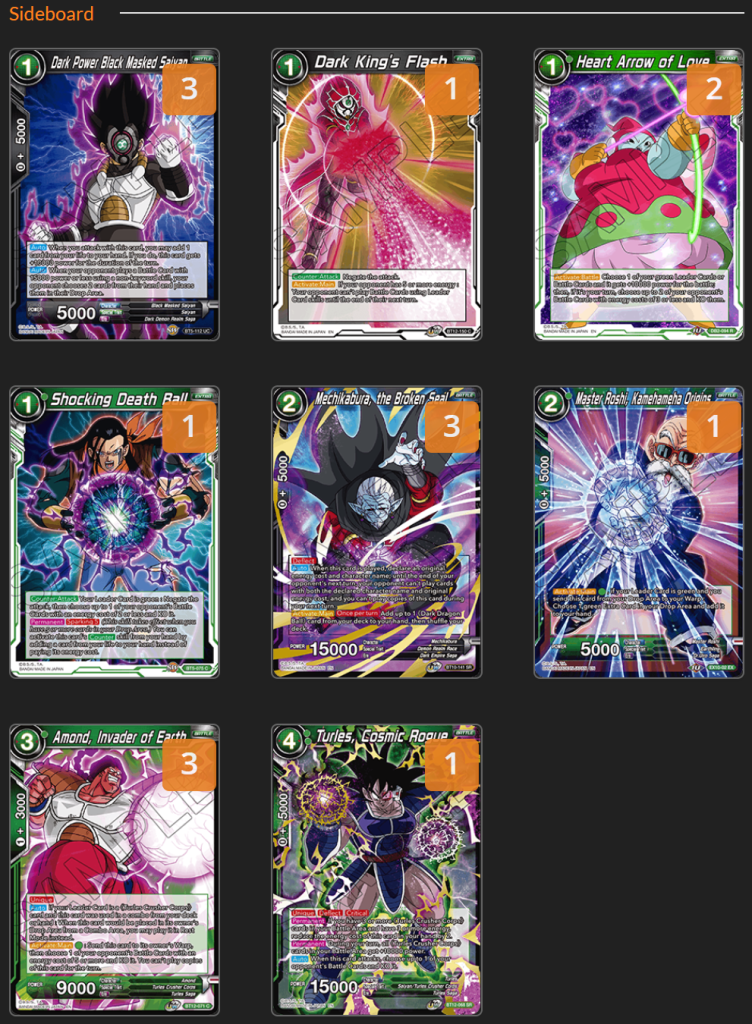
Chapter 7: Potential Sideboard

Against Syn Shenron

-2x Secret Identity Masked Saiyan
-2x Shocking Death Ball
-2x Roshi
-1x Rasin
-1x Dormant Potential Unleahsed

+3x Mechikabura
+3x Amond
+1x Dark King’s Flash
+1x Turles, Cosmic Rogue

The idea here is to steer away from our mid-range plan and make the deck more aggressive while also giving us the ability to disrupt key turns, remove Syn Shenron 9 drop, and have Dark King’s Flash as a fail safe if the game goes that long.

Against Red Broly: Br

-3x Kill Driver
-2x Secret Identity Masked Saiyan
-2x Turles, Cosmic Rogue

+3x Dark Power Black Masked Saiyan
+3x Mechikabura
+1x Roshi

Against Red Broly: Br the idea is to steer harder into the mid-range plan and focus on the disruption aspect while leaning into Fruit of the Tree of Might as our singular win condition. Siding out SIMS feels awkward, but not as awkward as having 8 black cards in our deck post board – just leaves too much room for RNG to get in the way. Being on the play with the ability to access Unison or Dark Power just feels too good to pass up. From there if you then go turn two Mechikabura to turn off the Broly Chain, you now have a vice grip on the match.

Against King Piccolo

-3x Kill Driver
-2x Turles, Cosmic Rogue
-1x Amond

+3x Dark Power Black Masked Saiyan
+2x Heart Arrow of Love
+1x Master Roshi

Against King Piccolo the plan is to stay balanced, but bring in removal and disruption that lines up better. DPBMS is a catch all that requires an answer, Heart Arrow of Love allows us to pick off some Demon Clan acolytes, and Roshi gives us more of everything we want.

Against Reboot Gohan

-2x Turles, Cosmic Rogue
-1x Kill Driver

+1x Dark King’s Flash
+1x Shocking Death Ball
+1x Master Roshi

The key to beating Reboot Gohan – don’t let them touch you.

Against Vegeks

-3x Kill Driver
-1x Amond

+3x Dark Power Black Masked Saiyan
+1x Master Roshi

Against revamped Vegeks the assumption is that we will need more copies of Dormant and a way to disrupt their free plays – DPBMS and Roshi should be enough.

Against Dark Broly

-3x Daiz
-3x Kill Driver
-2x Secret Identity Masked Saiyan

+3x Mechikabura
+3x Amond
+1x Master Roshi
+1x Shocking Death Ball

Against Dark Broly we want to shift our removal towards Amond since it is much easier to enable without having to commit right away, as opposed to Kill Driver. Mechikabura is the card that bridges us to wherever we want to be since the card shuts the whole entire deck down. Roshi and Shocking Death Ball add more ways to defend the 30k attacks without overextending defensively.

Against Green Gotenks

-3x Daiz
-2x Turles, Cosmic Rogue
-1x Rasin

+3x Mechikabura
+3x Amond

We are way better at beating Dormant Potential Unleased then they are and our deck post board absolutely shuts down Gotenks 6 drop. Between Kill Driver, Amond, SIMS, and Captain Charisma – they can’t touch this.

Against Invoker

-4x Dormant Potential Unleashed
-2x Secret Identity Masked Saiyan
-1x Rasin

+3x Mechikabura
+3x Amond
+1x Turles, Cosmic Rogue

We go full aggro by leaning more into Cosmic Rogue coming down the turn we play Mechikabura to keep them off of their invoker enabler.

Chapter 8: Make ‘Em Go Night-Night

If you have stuck with me this far you can see how Turles has the potential to make an impact on the upcoming format. What I think I enjoy the most about the deck is the fact that it can pivot so well between aggro and mid-range within the entirety of your 65. Of course the downfall of the deck is its reliance on a Crusher Corps package to actually function, but the upside of their effects opens up a ton of options and decisions for the pilot – which of course I adore. If anything Turles is a solid choice in series 12 due to having more agency over your games. Your decisions truly matter in this deck and your sequencing has to be spot on whilst you try and dodge the landmines that exist in the format. My 65 certainly isn’t perfect, but for ME it has felt the best so far. The deck takes a TON of practice, and I am in love with that. You can’t just pick it up one time and master it, it takes a bunch of match experience to truly see and feel the power level of the deck.

Thanks for reading!

#ScrubFamisBestFam #KTHXBAAAIIIIIIII
The Importance of ACEC in Modern DBS

ACEC – Average Converted Energy Cost

Akin to most other resource based TCG’s, the longer a game is in development – the cheaper (cost wise) and more powerful cards have to become in order to create churn within current formats and give incentive to players to buy the new cards to remain competitive in whichever environment they decide to play in.

With this knowledge comes the need to adapt and be able to read the room, so to speak, when a new set releases and you’re trying to determine competitive viability of both new and older archetypes that have been juiced up from the new set. The best metrics for this task fall on the shoulders of my two favorite things: Actions Per Turn (APT) and Average Converted Energy Cost (ACEC).

At this point in time I believe I have gone over Actions Per Turn at length (TL;DR the more you do on a turn, the better), so today I want to spend my time on Average Converted Energy Cost – especially with Vicious Rejuvenation on the horizon, and the many new archetypes primed to make an impact on the meta game!

Breaking it Down

ACEC is calculated by looking over your deck list and counting each card and its in-game cost, then averaging it out by the total number of cards counted. When I state “in-game” cost, I mean the cost you’re more than likely to be paying for it – ex: Great Ape Bardock, Raider’s Warcry is a 4 cost Battle Card, but I will be playing it most often for the 2 energy combo cost so I count it as a 2 cost when calculating my deck’s ACEC. Another example would be the “free” counter plays enabled by Unisons, I would definitely count those as 0 – this is a huge reason why Unisons are so important in modern deck building, but more on that later.

There is always such a clear distinction between the best decks in a format and those that slightly miss due to their ACEC just falling short of that “tier 1” status. Today I want to take a look at the maximum potential of a few decks and calculate their Average Converted Energy Cost just so you can see how this metric does truly tie to a deck’s overall success within a format.

Here are some examples:

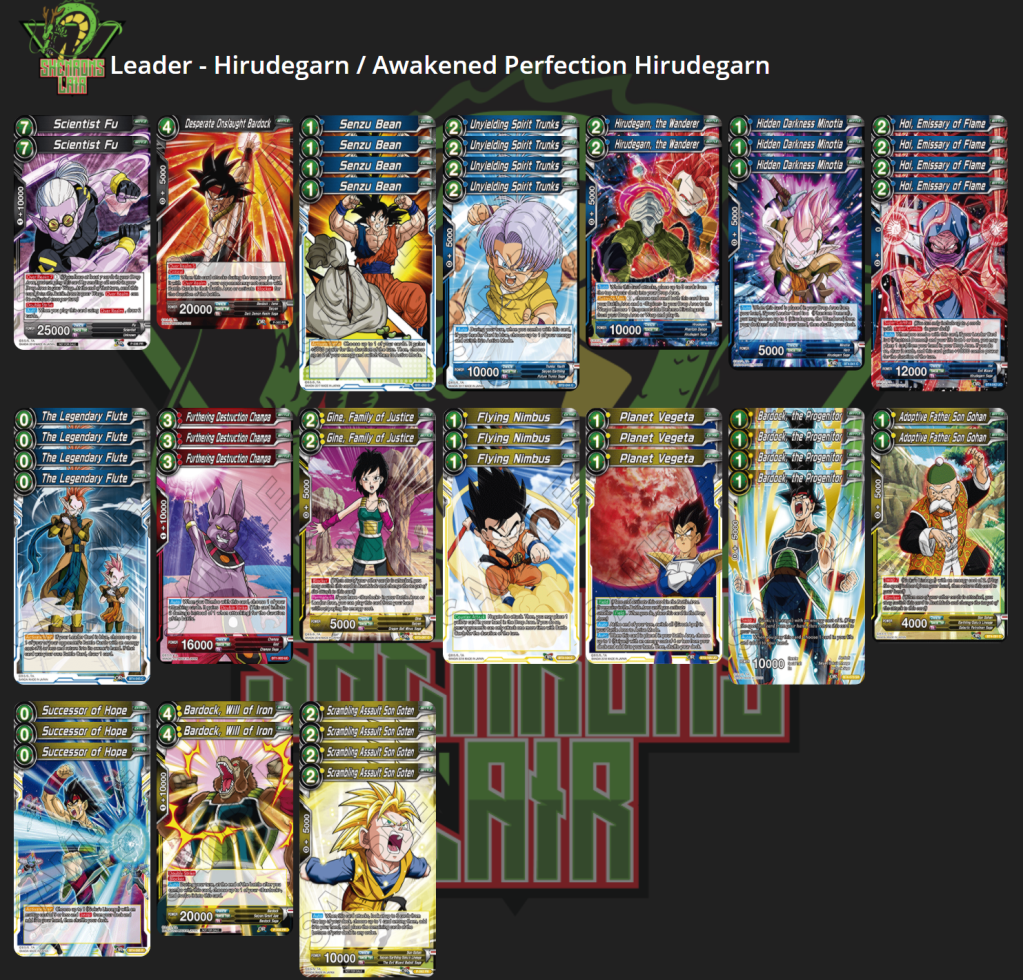
The GOAT – Chris Welch’s Winning Hiru Storm List

Fu 7 – 1, 1
FDC – 1, 1, 1
Nimbus – 1, 1, 1
Planet Vegeta – 1, 1, 1
Progenitor – 1, 1, 1, 1
Grandpa – 1, 1
Will of Iron – 1, 1

To set the stage we have to start with the deck that truly started it all in terms of Actions Per Turn and Average Converted Energy Cost – Hiru Storm comes in at 0.38 with its max potential being a total cost of 19 out of 50 cards. This is just raw counting, but if you then put Bean and Unyielding into the mix where they each net an energy, you can truly see how utterly broken this deck was and will always be.

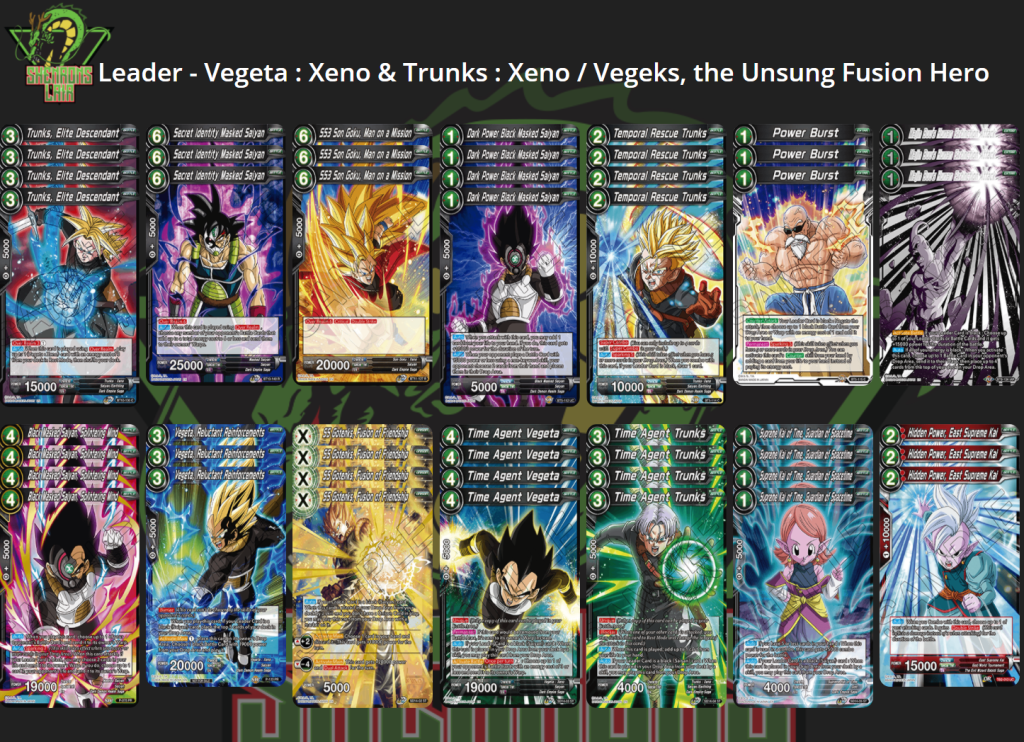
Pre B&R Vegeks

Trunks OR – 1, 1, 1, 1
Dark Power Black Masked Saiyan – 1, 1, 1, 1
Power Burst – 1, 1, 1
Extinction Attack – 1, 1, 1
Splintering Mind – 1, 1, 1, 1
HPESK – 1, 1, 1

If there is any reason Trunks, Elite Descendant had to go here is why – ACEC of 0.42 (max potential w/ a total cost of 21 out of 50 cards). This level of efficiency is simply unmatched, even by OG Storm.

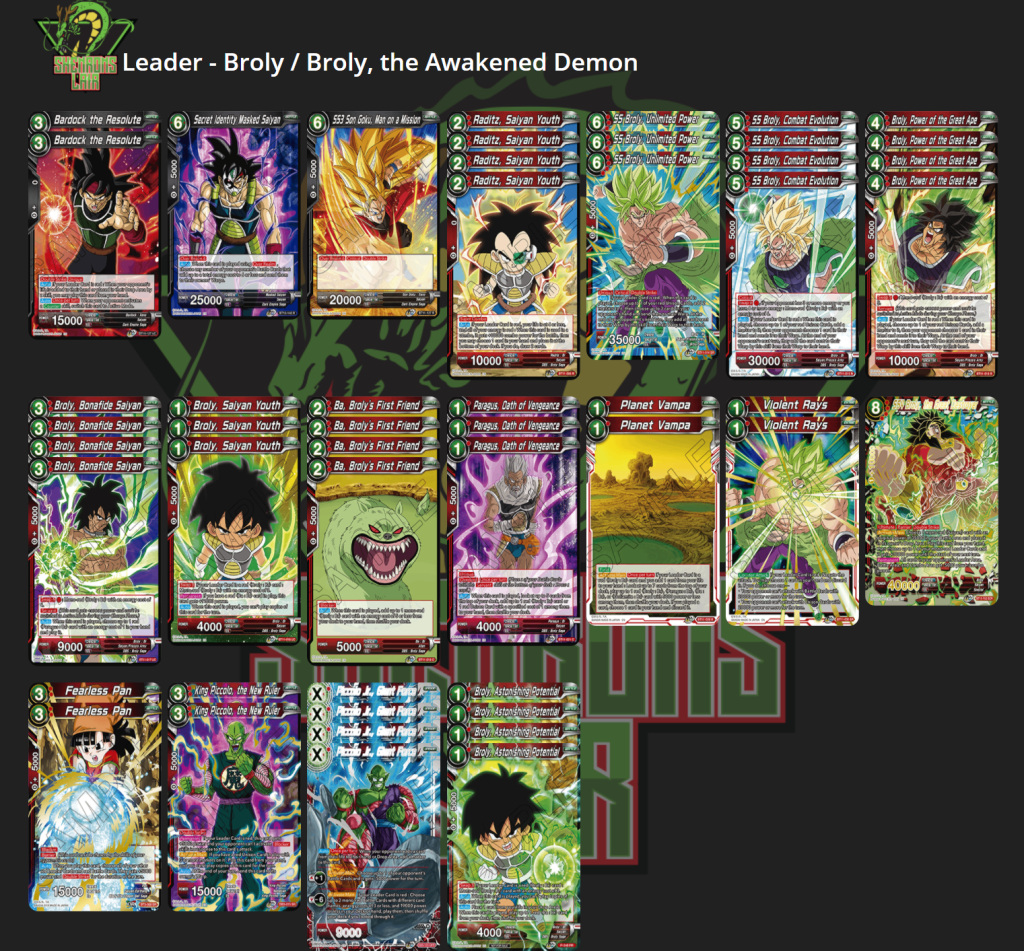
Red Broly

Vampa – 1, 1
Violent Rays – 1, 1
Unison – 1, 1, 1, 1
Broly 1 drop (7 copies & Free 60% of time) – 1, 1, 1
Broly 4 – 1, 1, 1, 1
Broly 5 – 1, 1, 1, 1
Broly 6 – 1, 1, 1
Paragus (Free 60% of the time) – 1

With an ACEC of 0.46 (max potential when 1 drop Broly and Paragus are free 60% of the time 23/50) – Red Broly clearly sets the pace for the rest of the format in S11, and heading into S12. This means that if you’re trying to compete your ACEC needs to be close, or a single one of your cards has to generate just as much value or more in order to keep pace in a given game. This is why at 3xG we stress the importance of floodgates and other X for 1’s since as the game continues to scale this way our philosophy and approach to deck building and meta gaming has to change as well.

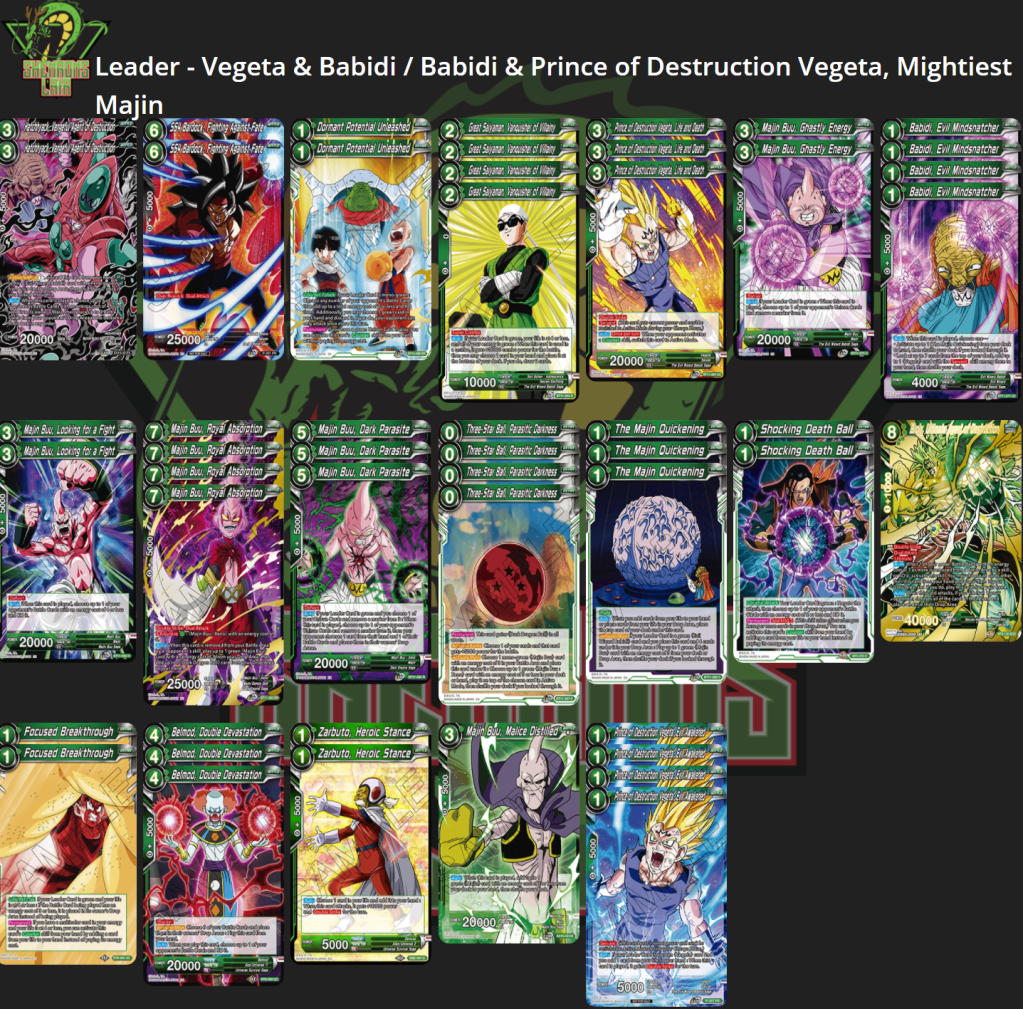
Majin Vegeta

Zarbuto – 1, 1
Dormant – 1, 1
Majin Vegeta 3 (Leader Skill) – 1, 1, 1
Babidi – 1, 1, 1, 1
Majin Buu 7 – 1, 1, 1, 1
Death Ball – 1, 1
Focused Breakthrough – 1, 1
Majin Vegeta 1 – 1, 1, 1, 1

Majin Vegeta went on quite the streak in a large number of series 11 events and garnered a ton of respect along the way. This list ALSO comes in at an ACEC of 0.46 (max potential of 23/50). Pretty easy to tell why this deck ended up being so successful – it really only loses to itself.

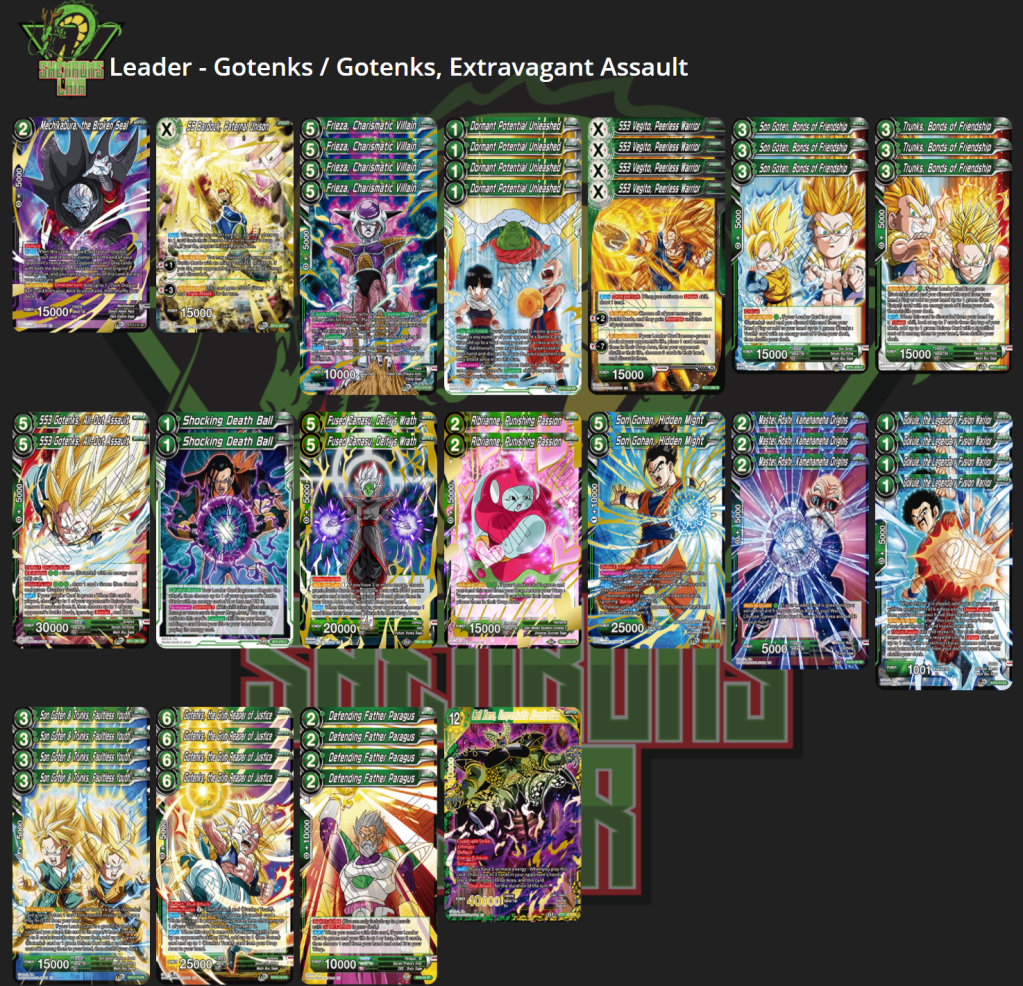
Gotenks

Mechikabura – 2
2 Cost Unisons – 2, 2, 2, 2, 2
5 Cost Gotenks – 3, 3
Death Ball (Sparking 50% or time) – 1
Zamasu – 1, 1
Ribrianne – 2, 2
Gohan – 2, 2
Roshi – 1, 1, 1
Gokule – 1, 1, 1, 1
Reaper of Justice – 2, 2, 2, 2

Green Gotenks was definitely a gatekeeper deck in the series 11 format came in at 0.88 (Total energy cost of 44 in a 50 card deck). Gotenks was definitely the perfect combination of disruption alongside relatively cheap, powerful threats and led it to being the #1 mid-range deck of series 11 format.

Red Gogeta

Gotenks Unison – 2, 2, 2, 2
Gogeta 5 – 3, 3, 3, 3
Birth of a Super Warrior – 1, 1, 1, 1
Violent Rays – 1, 1, 1
Toppo – 2, 2, 2
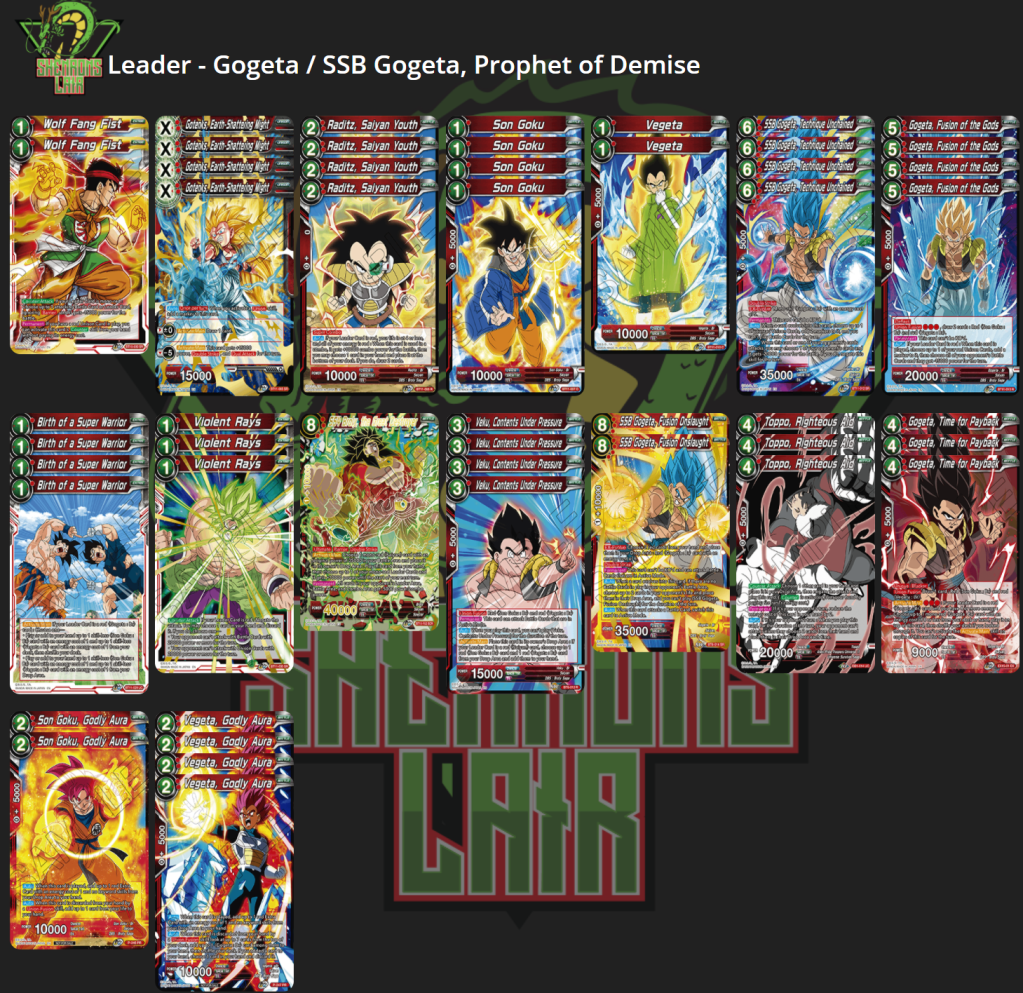
Gogeta, Time for Payback – 3, 3, 3

Red Gogeta came in at 0.84 (total energy costs adding up to 42 out of 50 cards). With Gogeta having just a slight edge over Gotenks, why did it underperform? Too many 3 cost cards which allowed for the more defensive blue decks to setup shop, and Dormant Potential Unleashed is much more powerful than Violent Rays in a format where Vegeks was S Tier.

How Some Series 12 Builds Stack Up

Post B&R Vegeks Weenies ACEC is 0.48 (max potential w/ a total cost of 24/50)

Goku 1 – 1, 1, 1, 1
Vegeta 1 – 1, 1, 1
Kai of Time SCR – 1
Dark Power Black Masked Saiyan – 1, 1, 1, 1
Power Burst – 1, 1, 1, 1
Extinction Attack – 1, 1, 1, 1
HPESK – 1, 1, 1, 1

This version of Vegeks is my personal favorite in early S12 testing due to how well it keeps the ACEC down and enables the early awakening to turn the Unison into another lethal threat to go aside your weenies and leader plus HPESK.

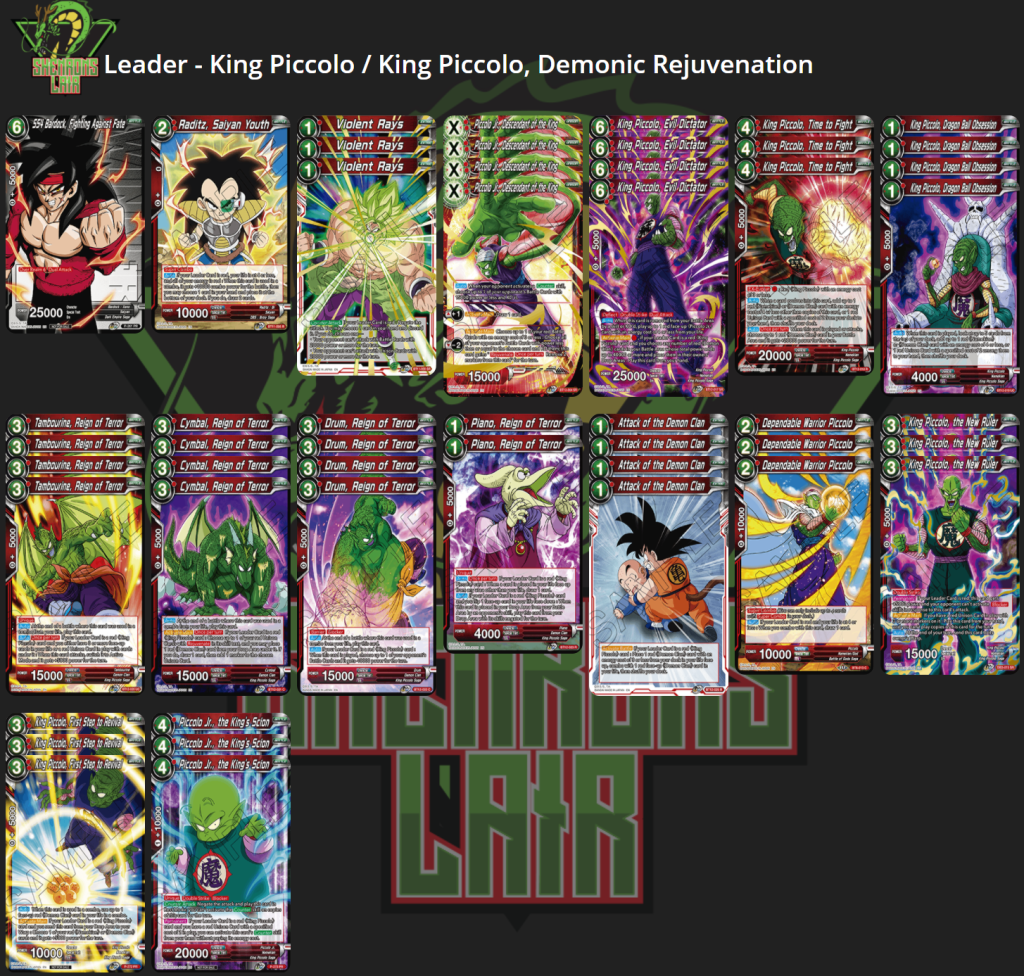
King Piccolo’s ACEC is 0.56 (max potential w/ a total cost of 28/50)

3x Violent Rays – 1, 1, 1
4x Unison – 2, 2, 2, 2
4x Piccolo 6 – 1, 1, 1, 1
3x Piccolo 4 – 1, 1, 1
4x Piccolo 1 – 1, 1, 1, 1,
2x Piano 1- 1, 1
4x Attack of the Demon Clan – 1, 1, 1, 1

King Piccolo hasn’t been hyped up enough and Frisco’s brew will definitely change your mind. All of the threats in your deck cost 1 or less and the Leader acts as the engine for the machine – that always is a huge boon when it comes to these aggro/combo archetypes.

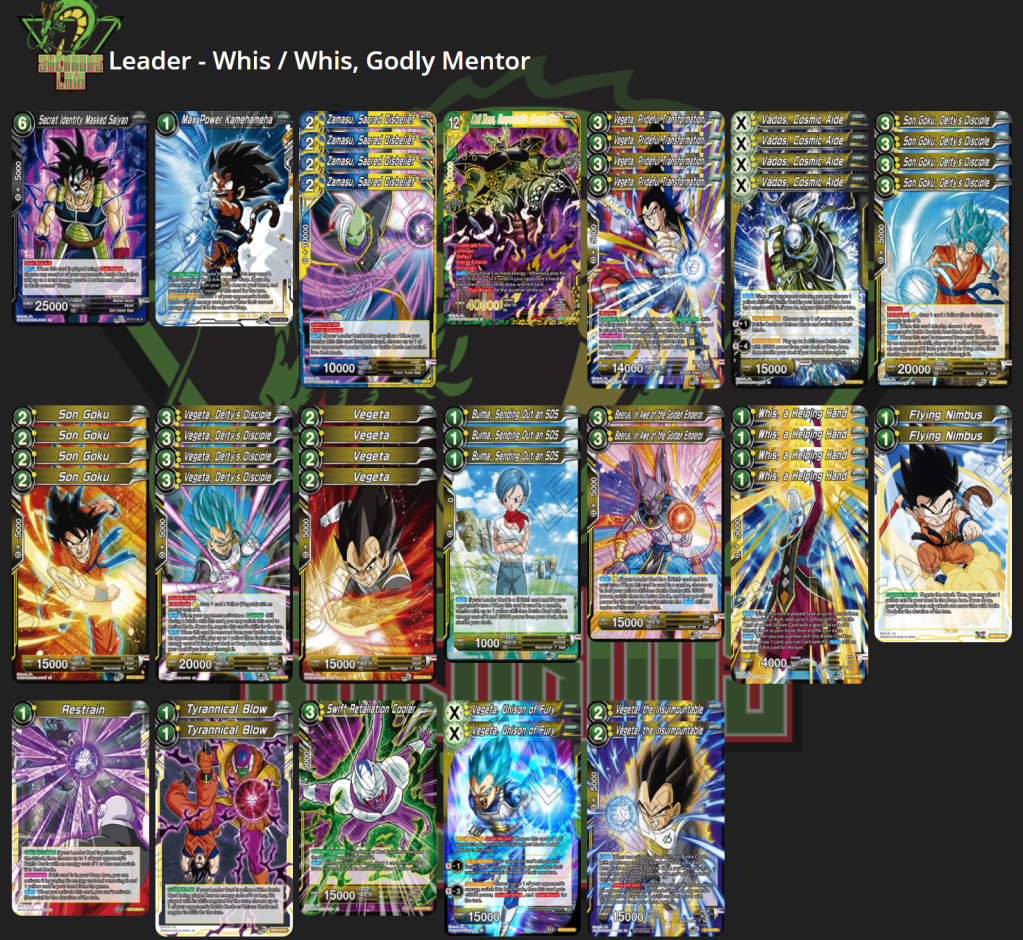
Whis’s ACEC is 0.70 (max potential w/ a total cost of 35/50)

Max Power – 1
Vados Unison – 2, 2, 2, 2
Goku 3 – 1, 1, 1, 1
Vegeta 3 – 1, 1, 1, 1
Beerus – 1, 1
Whis 1 – 1, 1, 1, 1
Nimbus – 1, 1
Restrain – 1
Tyrannical Blow – 1, 1
Cooler – 3
Vegeta Unison – 2, 2

We step slightly down in when it comes to ACEC, but Whis is quite potent with the ability to present free 15k’s each turn and can leverage the leader and Vados Unison to again act as the engine for the deck.

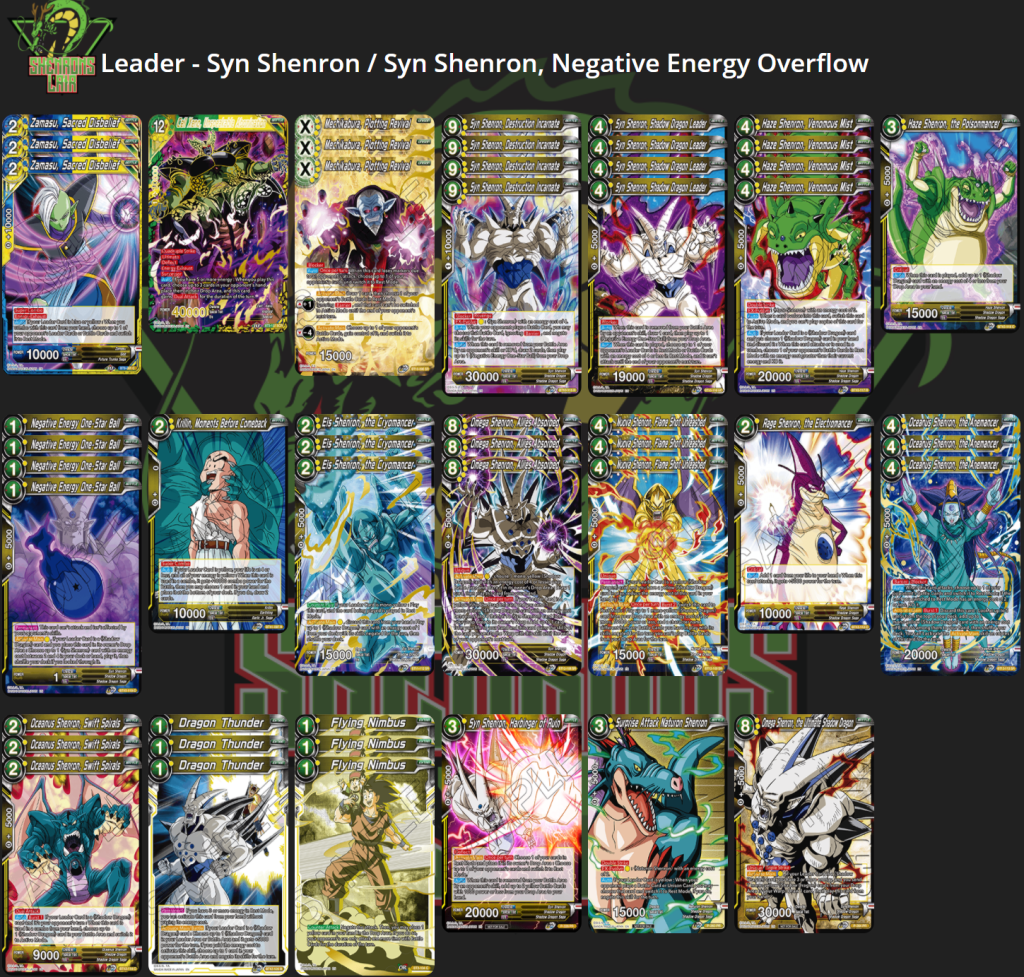
Syn Shenron’s ACEC is 0.72 (max potential w/ a total cost of 36/50

Mechikabura Unison – 4, 4. 4
Syn 9 – 1, 1, 1, 1
Syn 4 – 1, 1, 1, 1
Syn 1 – 1, 1, 1, 1
Eis – 1, 1, 1
Omega SR – 1, 1, 1
Nuova – 1, 1, 1
Nimbus – 1, 1, 1

Syn Shenron’s cost is deceptive due to the Unison. If you were to cut the card all together the average ACEC would then dip to 0.48 (24/50) – which when thinking about a tanky mid-range/control archetype is pretty wild. This deck fines Syn Shenron 1 drop consistently, has new tools to keep it alive, and has the ability to get into the red zone early to make that turn 6 leader activation a guaranteed kill.

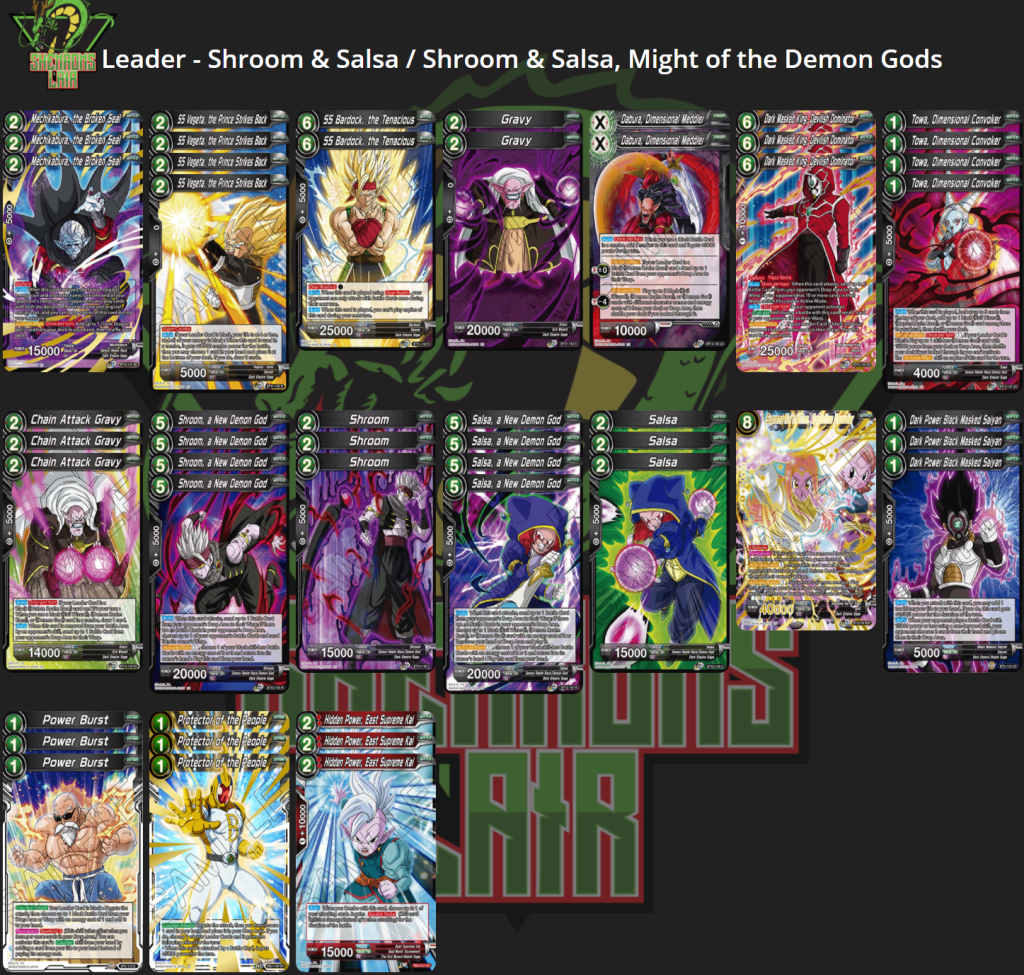
Shroom & Salsa’s ACEC is 1.04 (max potential w/ a total cost of 52/50

Mechikabura (Leader Skill) – 1, 1, 1
Tenacious – 1, 1
Gravy Skill-less (Leader Skill) – 1, 1
Dabura Unison – 1, 1
Masked King – 4, 4, 4
Towa 1 – 1, 1, 1, 1
Shroom 5 – 1, 1, 1, 1
Shroom Skill-less – 1, 1, 1
Salsa 5 – 1, 1, 1, 1
Salsa Skill-less – 1, 1, 1
Kai of Time SCR – 1
Dark Power Black Masked Saiyan – 1, 1, 1
Power Burst – 1, 1, 1
Protector of the People – 1, 1, 1
HPESK – 1, 1, 1

A deck that a lot of folks think is hyper competitive, Shroom and Salsa offer one of the highest ACEC’s so far due to the preferred finisher costing 4 and just the amount of cards that have a 1 energy requirement to be played. Don’t get me wrong, the deck is quite efficient with the amount of 1’s it plays – but ultimately the lack of “free” just leaves a lot to be desired in comparison to the decks listed above.

Context Always Matters

ACEC is a fantastic metric to keep track of when deck building and trying to determine the viability of newer and older archetypes whenever a set comes out – just don’t forget that context always matters when determining a deck’s overall success and sometimes there are additional factors such as leader abilities that can contribute to a deck’s ability to manipulate its ACEC such as Soul Striker or Vegito.

Even when approaching those decks, keeping track of ACEC is the best way to figure out your overall potential for Actions Per Turn and of course how you can best respond to whatever your opponent does if they are on one of the better decks in regards to ACEC. This is such an important thing to learn in DBS due to how games tend to snowball so quickly. If what your deck is attempting to do cannot trade up/evenly or completely mitigate what your opponent is trying to do – then it is time to move onto a different build and work on increasing your max potential.

Another great example of context mattering took place just this past format with the lack of Red Broly being played causing the whole entire format to not turnover as it potentially should have (in theory):

If Red Broly is level 1 – Syn Shenron is the natural predator at level 2
If level 2 is Syn Shenron – Vegeks puts the work in at 3
Gotenks and Dormant are level 4 – Dark Broly eats it at 5
Heroic and Baby Hatch at 6 – Invoker eats at 7
Red Broly then turns it back over

Instead the format changed into:

Vegeks is level 1 – Green Gotenks and Dormant is level 2
Dark Broly beats up on Gotenks and Dormant at level 3
Heroic Prospect and Baby Hatch are level 4
Invoker is level 5 – Red Broly is the natural predator at 6
Syn Shenron is 7 – Vegeks then turns the format back over

Absolutely wild how just lack of promos takes Syn Shenron from level 2 down to level 7, and the same with Red Broly going down from 1 to 6. Your deck choices for the first and last weeks of the format are just so wildly different – that is pretty neat when you start to look at it that way. I know it is just numbers shifting around, but the amount of reads or meta calls that can be made just changes so much in each system. PS I love this shit.

Unisons are Gud, but 1 Cost Unisons are Gudder

As we talked about earlier on, Unisons have had such a huge impact on the game – especially when it comes to ACEC. The ability to enable free counter: play battle cards and other free effects helps drive the cost of your deck down so much and of course enables a higher number of potential actions on both players’ turns. 1 cost Unisons are the “new” Lebron James of DBS – they do it all, they do it better, and they do it more efficiently than anyone else.

In my honest opinion, Unisons that cost more than 2 (outside of Mechikabura due to the Syn Shenron archetype) are now unplayable.

***Note that Soul Striker and SS3 make 3 cost Unisons either 1 or 0… which is absurd***

Conclusion

The release of series 12 is truly going to do a lot to the current format – we all need to adapt and start thinking with a different mentality as we approach competitive play and deck building in general. Consistency and efficiency are just so much more important now than before due to the power level of the engines being released and just how crucial the first 3 turns of the game are now. Your deck needs to be built either with the intention of doing the most possible in the first 3 turns, or doing something powerful enough in the first 3 turns to trade up/evenly or completely mitigate what the opposing player is trying to accomplish.

The game has changed and of course the world around us has as well, but one thing still remains the same:

Me inhales:
Me: “ALLEK PASTRANA, BEARDED COLLECTIBLES, THE BEST SHOP OWNER ON THE PLANET”

This game and community is truly there best there is, the best there was, and the best there ever will be. Stay safe and stay hungry.

Thank you for everything – I love you all.

#NewYearNewMentality #ScrubFamisBestFam #KTHXBAAAIIIIIIII